

Why Vanilla Protein Milkshakes Are Winning Shelf Space With Importers
TABLE OF CONTENTS

Importers that specialise in wellness-oriented beverages have spent the past two years watching one flavour logic repeat itself across nearly every category they buy into — the simplest profile travels furthest. Against that backdrop, the protein milkshake drink has quietly become one of the most requested items on RITA's order books, and the Protein Milkshake Drink Vanilla Flavor 320ml Sleek Can sits at the centre of that conversation. Vanilla is the anchor flavour here: familiar enough for mass retail, clean enough for premium shelves, and consistent enough to merchandise across seasons and price tiers.
For B2B buyers, that combination matters more than novelty. A milk drink that a distributor can explain in one sentence, replenish on a predictable cycle, and place in convenience channels without repositioning the shelf is worth more than a flavour that generates headlines for a single quarter. This report examines the category drivers behind the rise of the vanilla protein shake in a 320ml sleek can, the sourcing and certification backbone behind it, and the practical questions importers should ask before listing the product in Japan and South Korea.
Key Takeaways
- Vanilla remains the highest-appeal base flavour for protein milkshake drinks across both mass and premium retail formats.
- The 320ml sleek can format aligns with convenience, vending and travel-retail placement requirements in urban Asian markets.
- RITA manufactures under BRC, FSSC 22000, HACCP, ISO, GMP and Halal certifications, supporting importer compliance checks.
- Supply flexibility — 600 twenty-foot containers per month, flexible MOQ and 20–25 day lead times — protects distributor planning.
- Private label and OEM options let importers differentiate while reusing a proven vanilla milkshake formula.
Why Vanilla Leads the Protein Milkshake Drink Conversation
Vanilla works where more exotic flavours struggle: it stays recognisable across generations, price points and occasions, which is precisely what a broad-line distributor needs.
Within the RITA milk series catalog, vanilla consistently functions as the baseline that stabilises a wider lineup. Buyers in Tokyo, Osaka and Sapporo on the Honshu, Hokkaido, Kyushu and Shikoku islands, and in Seoul, Busan, Incheon, Daegu, Daejeon and Gwangju, tend to approach milk-based beverages through the lens of familiarity first. A vanilla profile lowers the barrier to trial for a shopper who is encountering a protein milkshake drink for the first time, and it lowers the risk for the importer who has to forecast repeat purchases rather than one-off curiosity buys.
That familiarity has measurable commercial weight. A flavour that a buyer can describe without explaining — creamy, smooth, mildly sweet, dairy-forward — shortens shelf-talkers, reduces returns on marketing collateral, and supports co-merchandising with coffee and tea lines that already sit in the same chiller. It is also the profile that travels best when a distributor is selling into multiple channels at once: convenience store, supermarket, vending machine, workplace canteen and online subscription boxes all reward a profile that is legible at a glance.
Consumer Context in Japan and South Korea
Both markets reward format discipline. Japanese retail is famously sensitive to can diameter, shelf height and point-of-sale visibility, while South Korean convenience chains prioritise quick-decision placement and rotational novelty. A 320ml sleek can sits comfortably in both worlds: narrow enough to slot into standard chiller rails, tall enough to stand out beside compact soda cans, and small enough to support an impulse price point that importers can defend against rising freight and aluminium costs.
Consumption habits reinforce the format choice. Milk-based drinks are already a familiar fixture in both markets, whether positioned as a breakfast complement, a mid-shift pause or a post-exercise refill. Layering a vanilla milkshake profile onto that established routine means the importer is extending an existing behaviour rather than inventing a new one — a distinction that typically shows up faster in repeat-order data than in launch-week sales.
Inside the 320ml Sleek Can Product Specification
The specification is deliberately simple to read, which is itself a selling point when buyers are comparing dozens of supplier quotes in a single sourcing round.
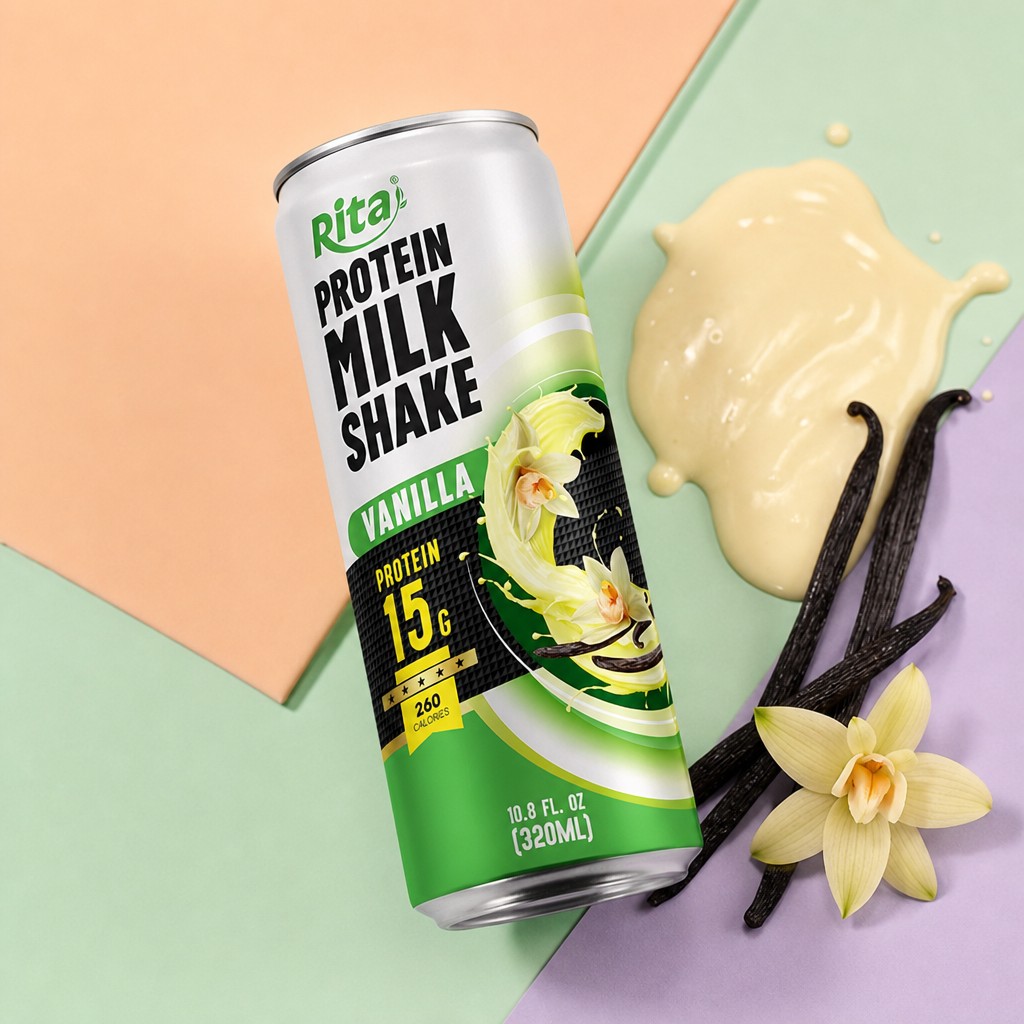
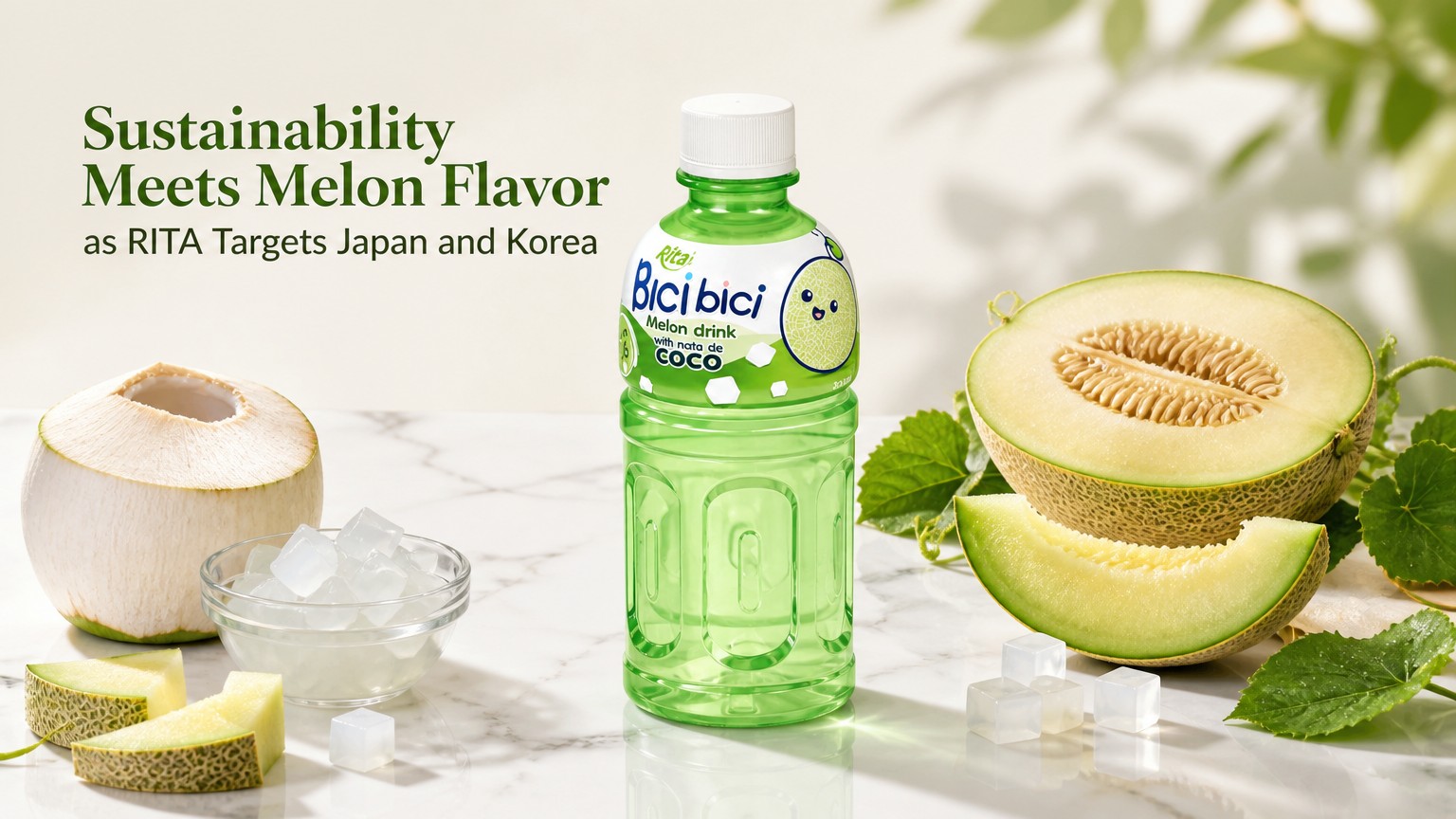
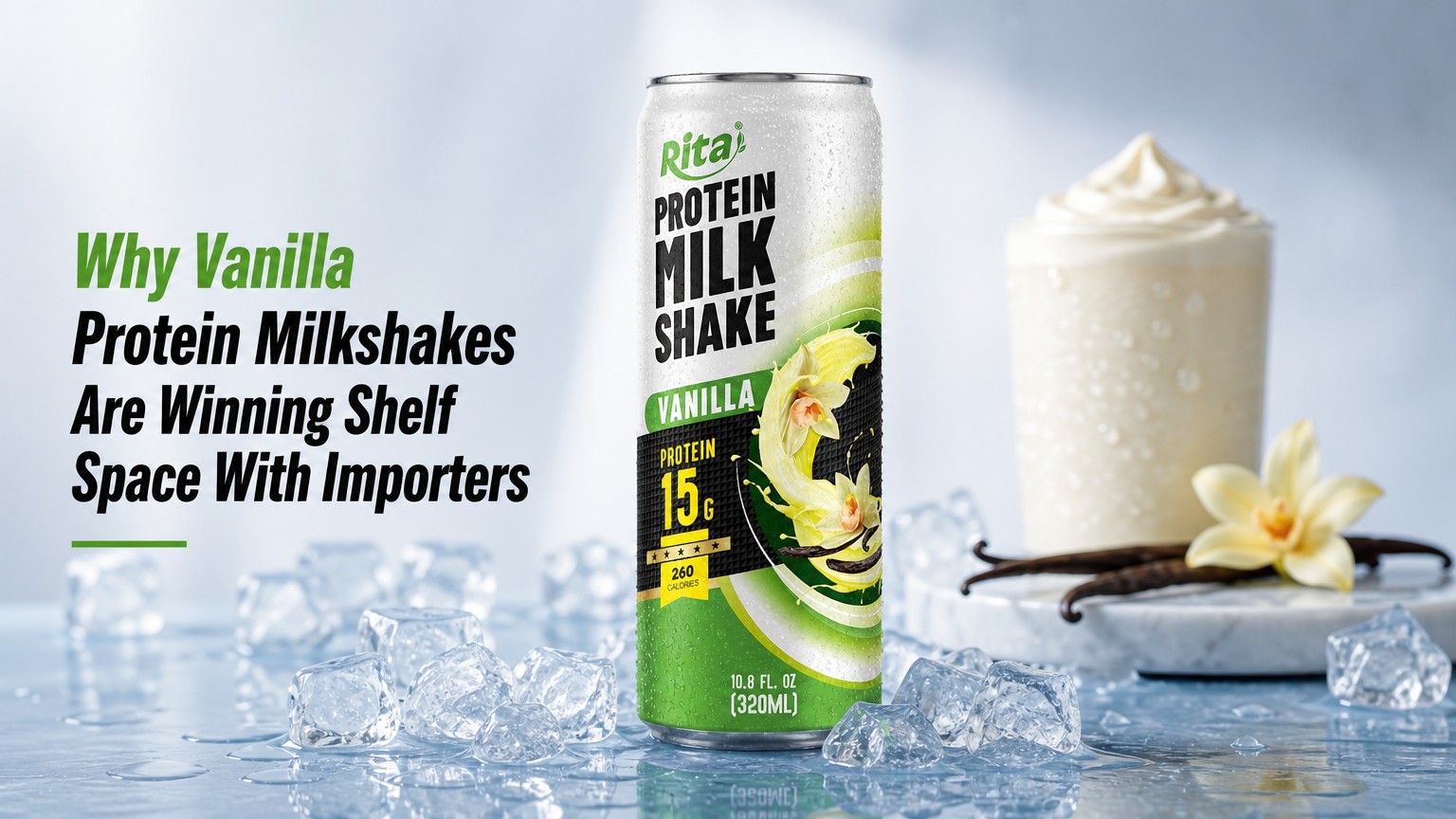
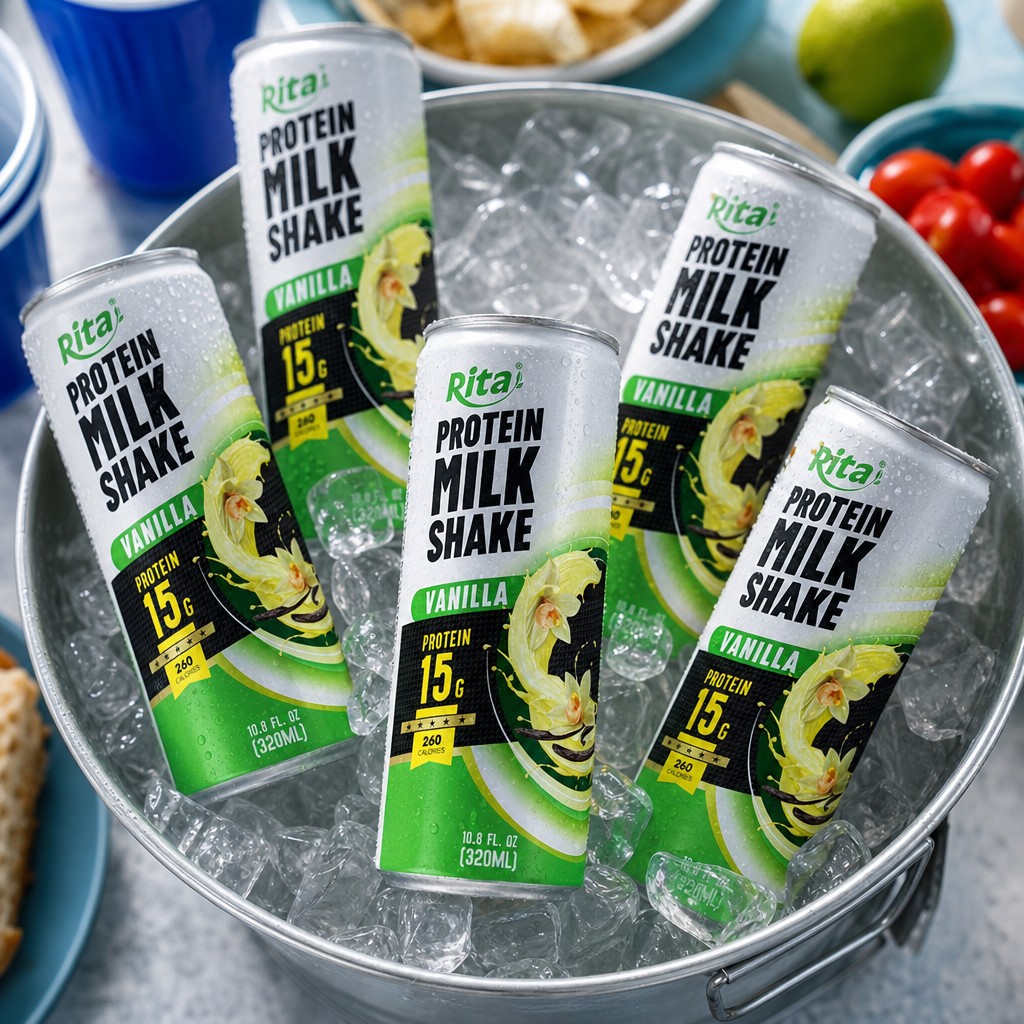
RITA's Protein Milkshake Drink Vanilla Flavor is supplied in a 320ml (10.8 fl. oz) aluminium sleek can, with a stated protein content of 15g and 260 calories per serving. The label design pairs bold typography with a vanilla flower illustration and a dynamic splash graphic, set against white, green, black and yellow colour fields. The result is a can that reads clearly at retail distance — an important detail when a listing competes for attention in a chiller filled with competing dairy and protein beverages.
| Specification | Detail | Why It Matters to Importers |
|---|---|---|
| Volume | 320ml / 10.8 fl. oz sleek can | Fits standard chiller and vending rails without reconfiguration |
| Protein content | 15g per serving | Clear on-pack figure for spec sheets and retailer category review |
| Calories | 260 per serving | Supports transparent product information at point of sale |
| Shelf life | 24 months | Enables long-distance freight and layered inventory planning |
| Port | Ho Chi Minh Port, Vietnam | Established container lane with regular sailing schedules |
| Lead time | 20–25 days after order confirmation | Supports seasonal listing windows and promotional calendars |
The 24-month shelf life deserves particular attention from a logistics standpoint. It gives distributors room to plan containerised shipments around tariff windows, promotional cycles and storage constraints without compressing the product's commercial window — a practical advantage when the importer is balancing milk drinks against shorter-lived dairy alternatives in the same warehouse.
Flavour Portfolio and Lineup Logic
RITA produces the milkshake line across five flavour profiles, which gives distributors a ready-made range architecture rather than a single-item listing.
- Vanilla — the anchor profile for mass retail and cross-channel placement.
- Chocolate — a classic pairing that supports indulgence-led positioning.
- Coffee — a natural extension for buyers already listing RTD coffee ranges.
- Strawberry — a fruit-forward entry point for younger shopper demographics.
- Honey — a mild, differentiated option that complements tea and milk lines.
Holding vanilla in the centre of that portfolio is a deliberate commercial choice. It anchors the range, reduces the risk of listing too many flavours at once, and gives the importer a dependable reorder item while other profiles test the market.
Raw Material Sourcing and Flavour Development
Sourcing reliability rarely appears on a shelf talker, yet it decides whether a listing survives its second season.
Vanilla and the supporting dairy and stabilising inputs behind a smooth, pourable milkshake profile are procured through established Vietnamese supply networks, including the Mekong Delta fruit farm region that supplies the wider RITA raw material base. The Mekong Delta raw material sourcing programme is central to how RITA maintains consistent flavour development across large production runs, giving importers a traceable reference point when they present sourcing documentation to retail category teams.
Consistency at scale is what separates a beverage that performs in month three from one that fails it. Vanilla is particularly unforgiving here: small shifts in extract strength or sweetness balance are immediately visible in a dairy-based drink. Sourcing discipline and in-house R&D therefore sit at the core of the product's repeat-purchase performance rather than behind it.
For buyers who want to inspect the raw material landscape directly, RITA's field-to-factory documentation provides an accessible starting point: https://www.youtube.com/watch?v=jiBixXjeG8A
Certified Production and Export Capacity That Importers Can Plan Around
Compliance documentation and container supply are the two issues that most often derail an otherwise sound beverage listing.
RITA Food and Drink Co., Ltd, established in 2004, is a Vietnamese OEM and ODM beverage manufacturer that supplies brands in more than 200 countries and territories. The company operates over 50 automated production lines and moves more than 1,200 containers per month, with a stated supply ability of 600 twenty-foot containers per month across its beverage portfolio. For an importer evaluating whether a supplier can absorb a regional rollout, that scale is the difference between a sample order and a listing programme.
On the compliance side, the milkshake line is produced under internationally recognised standards. The certification set includes BRC, FSSC 22000, Halal Jakim, Halal HCA-GCC, Kosher, ISO, GMP, HACCP and SMETA — a breadth of credentials that is unusually comprehensive for a single beverage SKU and directly relevant to beverage export certifications checks run by Japanese and South Korean importers.
OEM and Private Label Flexibility for Milk Series Buyers
RITA offers both OEM and ODM routes, which means an importer can either take the standard formulation behind the Protein Milkshake Drink Vanilla Flavor 320ml Sleek Can or develop a private label variant from the same production platform. Flexible minimum order quantities lower the entry barrier for distributors testing a new channel, while payment terms on L/C and T/T give finance teams a familiar framework for structuring the first order.
Commercially, private label matters most when a distributor is negotiating shelf space against established brands. Owning the can design, the flavour balance and the specification language allows a buyer to differentiate without commissioning a new formulation from scratch — an efficiency that becomes more valuable as freight and aluminium pricing continue to pressure landed costs. Importers currently evaluating a protein milkshake drink for their next listing cycle can review the full specification directly on the RITA product page and request samples through the standard B2B enquiry channel.
Building a Multi-Flavor Milkshake Lineup for Modern Retail
Most successful beverage listings are built as a system, not as a single hero item.
The wider industry is moving in the same direction. Keurig Dr Pepper's appointment of a new coffee leadership team alongside the launch of global cold-coffee concentrates signals how aggressively major players are extending beverage platforms beyond traditional boundaries. Cizzle Brands, meanwhile, has pointed to what it describes as a substantial opportunity in better-for-you sports drinks, a development that strengthens the overall shelf position of protein-forward beverages. Both trends favour a supplier that can deliver a consistent base formulation across multiple flavour executions.
Branding language is shifting too. Benchmark Drinks' managing director has argued publicly that wine brands should lead with emotion rather than technical jargon — an observation that translates directly to the milkshake category. A vanilla protein shake listing is bought first for its flavour clarity and familiarity, then defended with specification detail. Importers that keep their shelf talkers simple, and their compliance documents thorough, tend to hold their listings longer than competitors who lead with ingredient complexity.
For distributors building out a milkshake range, the practical sequence is straightforward. Start with vanilla as the volume anchor, add chocolate and coffee to broaden the shelf narrative, and use strawberry and honey as targeted test listings in younger demographics. That approach keeps inventory exposure contained while the importer gathers real sales data, and it aligns with how RITA structures its production and export planning across the milk series.