

Rita Sparkling Blueberry Drink Enters Japan and Korea Supply Chains
TABLE OF CONTENTS
-
- What is the shelf life of Rita Sparkling Blueberry Drink?
- What certifications does RITA hold for sparkling beverage exports?
- Can RITA provide OEM or private-label sparkling blueberry drinks?
- What is the minimum order quantity for sparkling beverage orders?
- How long does delivery take from Vietnam to Japan or South Korea?

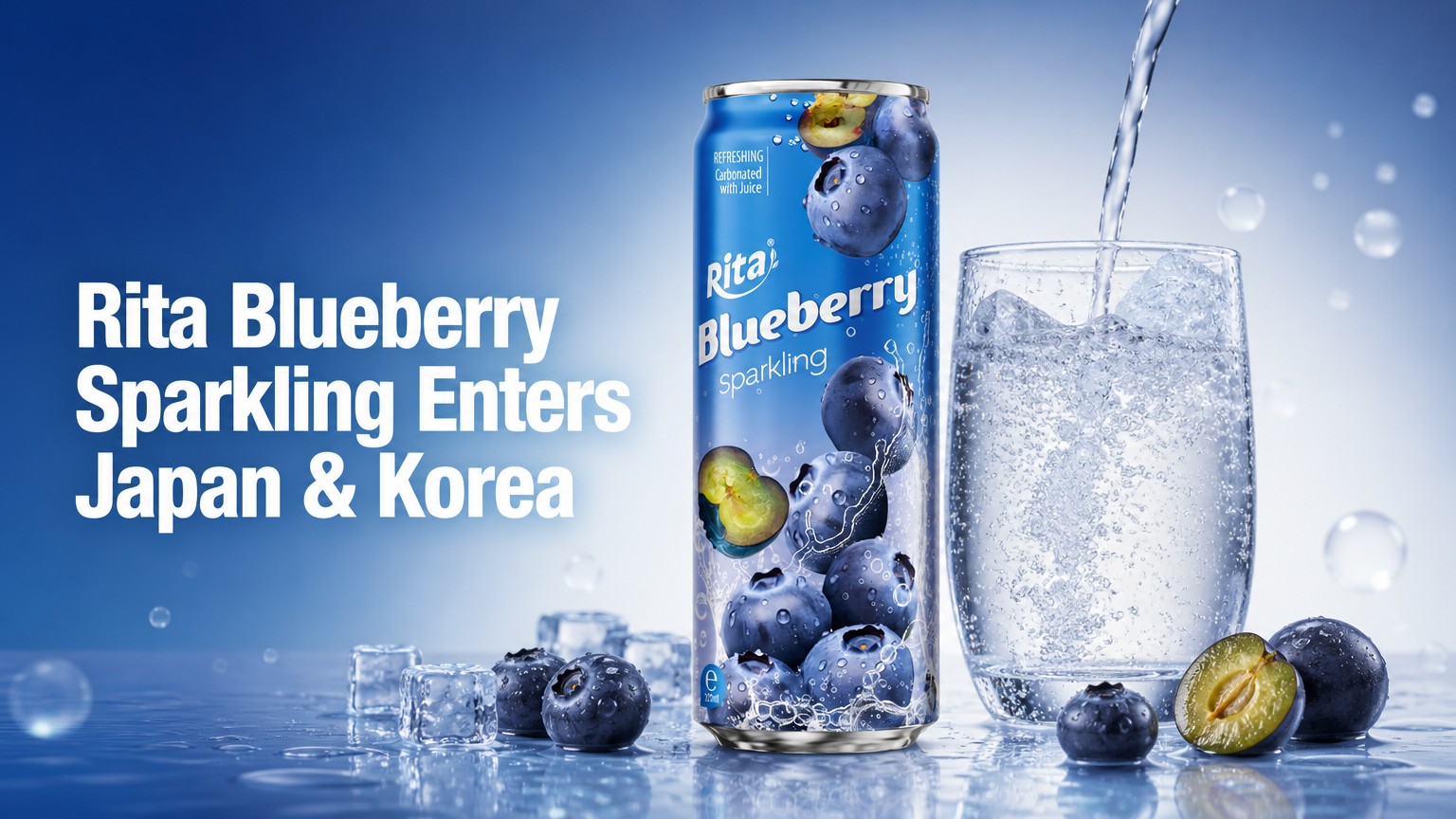
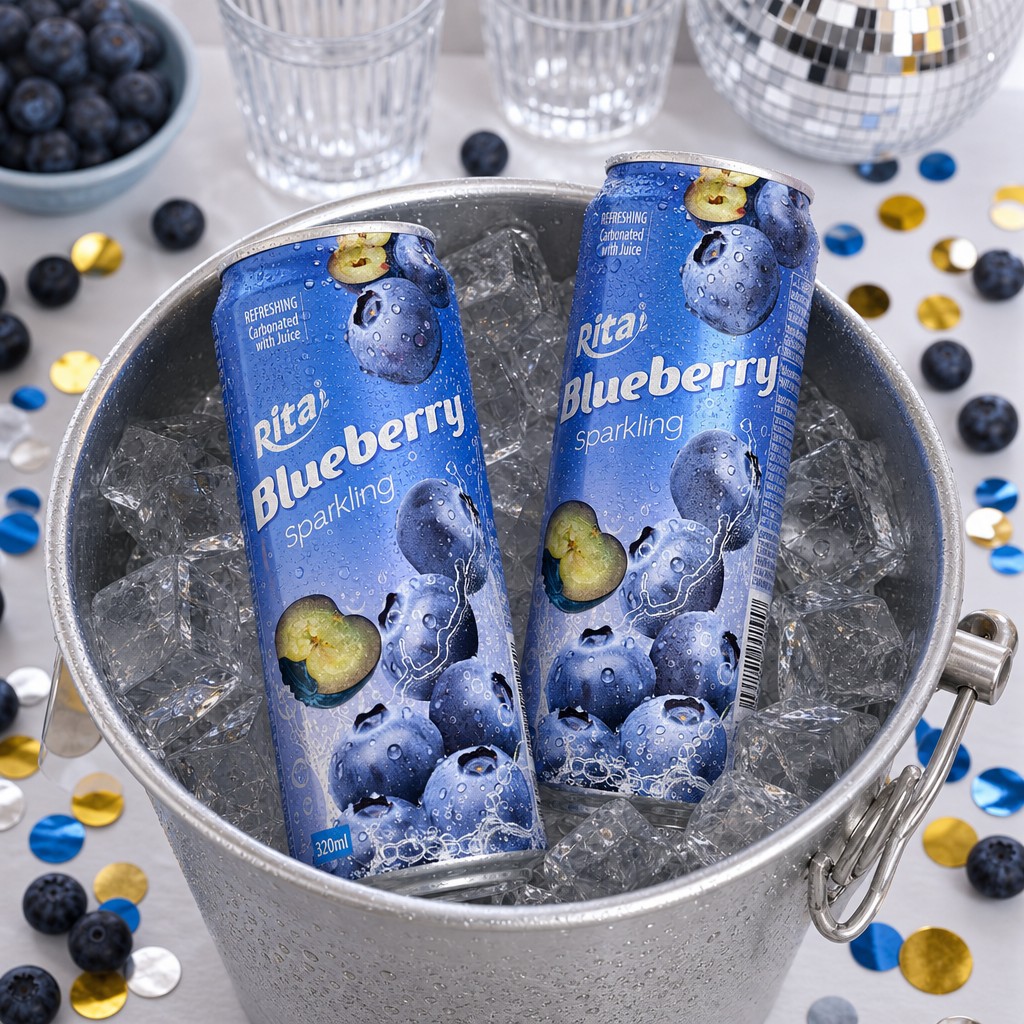
The global sparkling beverage market continues to evolve as consumer demand for fruit-flavored carbonated drinks accelerates across Asia-Pacific. Among the emerging product categories gaining traction in Japan and South Korea is the sparkling blueberry segment, driven by the fruit's distinctive sweet-tart profile and deep blue color palette that resonates with modern packaging aesthetics. For supply chain decision-makers sourcing from Vietnam, the Rita Sparkling Blueberry Drink 320ml Sleek Can represents a compelling entry point into this growing niche.
Japan and South Korea, two of Asia's most sophisticated beverage markets, have demonstrated consistent appetite for innovative carbonated offerings. From convenience stores in Tokyo's Honshu district to premium retail outlets across Seoul and Busan, the trend toward fruit-forward sparkling drinks shows no signs of slowing. This article examines how manufacturers like RITA are positioning their supply chain infrastructure to serve these demanding markets, and what buyers should consider when evaluating sparkling blueberry drink sourcing options.
Key Takeaways
- The Asia-Pacific sparkling beverage market is expanding, with Japan and South Korea leading demand for fruit-flavored carbonated innovations
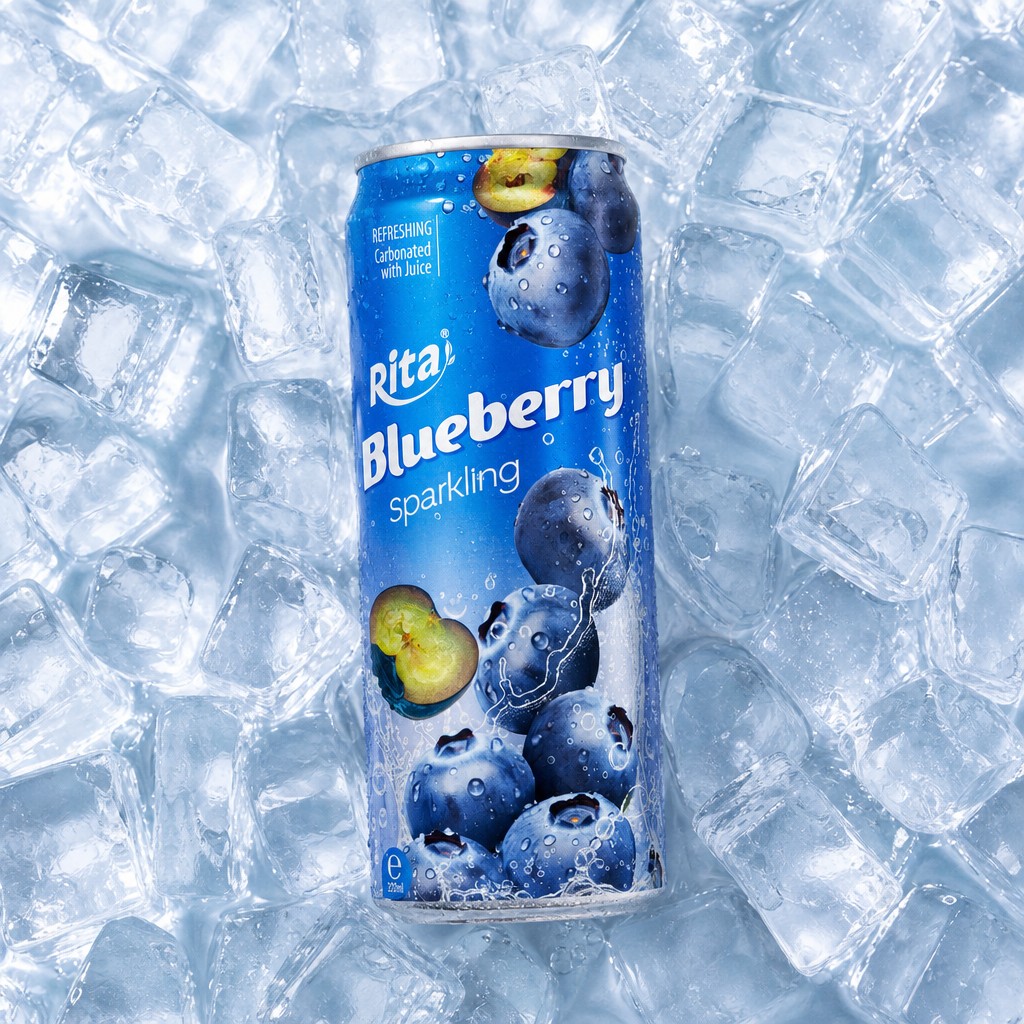
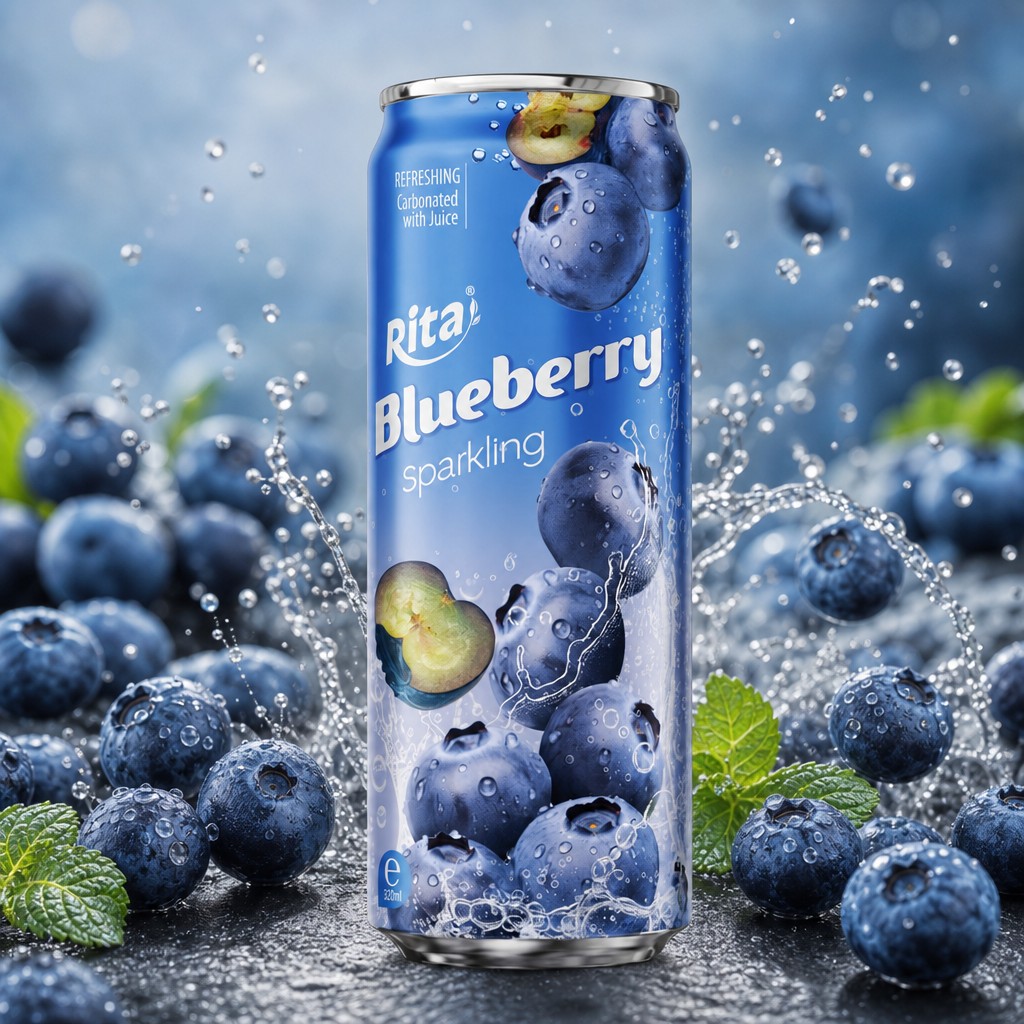
- Rita Sparkling Blueberry Drink 320ml Sleek Can combines blueberry aroma with balanced sweetness in a sleek aluminum format
- RITA Food & Drink Co., Ltd operates 50+ automated production lines with 1,200+ containers exported monthly across 200+ countries
- Supply chain advantages include flexible MOQ, 20-25 day delivery windows, and multiple port options from Ho Chi Minh City
- Certified under BRC, FSSC 22000, ISO, HACCP, and Halal standards — critical for Japan and Korea import compliance
Why Sparkling Blueberry Is Gaining Ground in Japan and South Korea
Blueberry has become one of the most recognizable fruit flavors in the global beverage landscape. Originally native to North America, the fruit's sweet-tart character and vivid deep-blue coloring have made it a favorite among beverage formulators seeking both visual impact and flavor distinction. In Japan's Honshu, Hokkaido, Kyushu, and Shikoku regions, blueberry-flavored drinks have steadily gained shelf space, particularly in the 300-350ml can format that dominates convenience retail.
South Korea mirrors this momentum. In cities like Seoul, Busan, Incheon, Daegu, Daejeon, and Gwangju, consumers aged 18-35 have shown a marked preference for sparkling drinks that combine natural fruit aromas with lighter carbonation levels. The 320ml sleek can format aligns precisely with this demographic's consumption patterns — portable, visually clean, and designed for on-the-go moments.
Market analysts note that the intersection of health-conscious purchasing behavior and premium packaging expectations creates a unique window for exporters. Unlike traditional sugary sodas, sparkling blueberry drinks occupy a middle ground that appeals to consumers seeking flavor sophistication without heavy sweetness. This positioning is particularly relevant in Japan, where regulatory standards for labeling and ingredient transparency are among the strictest in the world.
The Supply Chain Equation: Sourcing Sparkling Blueberry from Vietnam
Vietnam has emerged as a significant manufacturing hub for the global beverage industry, with RITA Food & Drink Co., Ltd standing as one of the country's leading OEM and ODM beverage producers. Established in 2004, the company operates more than 50 automated production lines and exports over 1,200 containers monthly to destinations spanning 200+ countries and territories. For buyers targeting Japan and Korea, this scale provides meaningful advantages in both cost efficiency and production reliability.
Production Capabilities and Flexibility
The Rita Sparkling Blueberry Drink is manufactured on dedicated carbonated beverage lines that handle aluminum can formats with precision. The 320ml sleek can — a standard unit in both Japanese and Korean retail — undergoes rigorous quality checks consistent with the certifications RITA maintains: BRC, FSSC 22000, ISO 22000, HACCP, GMP, and Halal (Jakim and HCA-GCC). These certifications are not optional checkboxes for Asian market entry; they are baseline requirements that Japanese and Korean importers enforce without exception.
What sets RITA apart from competing Vietnamese manufacturers is the flexibility embedded in its production model. The company accommodates both branded products and OEM/ODM arrangements, allowing buyers to customize formulations, packaging designs, and flavor profiles. For Japanese retailers seeking a private-label sparkling blueberry offering, or Korean distributors looking to introduce a new brand under their portfolio, this adaptability translates to shorter development timelines and lower barrier to market entry.
Logistics and Delivery Windows
For supply chain managers, delivery speed and reliability are non-negotiable. RITA's standard delivery timeline of 20 to 25 days from order confirmation provides a competitive window, particularly for seasonal promotional campaigns that require precise inventory timing. Shipments depart from Ho Chi Minh Port, one of Vietnam's busiest commercial ports, with direct routing to major Asian destinations including Tokyo, Yokohama, Busan, and Incheon.
The company's monthly export capacity of over 600 twenty-foot containers ensures that volume commitments — whether a trial order or a full-scale launch — can be met without production bottlenecks. For buyers evaluating supply chain resilience, this capacity is a critical differentiator. RITA's payment terms of L/C and T/T further align with standard international trade practices, reducing friction in financial transactions between Vietnamese producers and Asian buyers.
Blueberry Beverage Trends Across Asia-Pacific Markets
The sparkling blueberry category sits at the intersection of several macro-trends reshaping beverage consumption in Japan and South Korea. First, the shift toward fruit-forward carbonation reflects broader consumer fatigue with traditional cola-based sodas. Second, the aesthetic appeal of blueberry — with its deep indigo hue and natural association with premium positioning — aligns with packaging trends that prioritize visual storytelling on shelves.
In Japan's Hokkaido region, known for its agricultural heritage and consumer willingness to pay premium prices for quality beverages, blueberry-flavored drinks have found a receptive audience. Similarly, Korean consumers in Daejeon and Gwangju, cities with growing young professional populations, have embraced sparkling fruit drinks as part of their daily routines. The trend is not limited to premium retail; convenience stores and vending machines — still a dominant distribution channel in both countries — increasingly stock fruit-flavored carbonated options.
From a supply chain perspective, this demand creates opportunities for exporters who can deliver consistent quality at scale. RITA's advanced R&D capabilities allow for formulation adjustments that cater to specific market preferences — for instance, reducing sugar content for the Japanese market or adjusting carbonation levels for Korean taste profiles. These are not generic mass-production decisions; they reflect the nuanced understanding that successful market entry in Asia requires localization at the product level.
Competitive Landscape in the Sparkling Segment
Japan's sparkling beverage shelf is crowded. Suntory, Kirin, and Asahi dominate domestic production, while international brands compete on differentiation. The advantage for imported sparkling blueberry drinks lies not in displacing these giants, but in filling niches they underserve. Private-label sparkling fruit drinks, limited-edition seasonal flavors, and ultra-premium single-origin fruit beverages represent accessible entry points for Vietnamese exporters.
In South Korea, the competitive dynamics are different. The market is more open to new entrants, particularly those that can demonstrate production credibility through recognized certifications. Korean distributors evaluating the Rita Sparkling Blueberry Drink will look beyond the product itself to assess the manufacturer's compliance infrastructure, export track record, and ability to support co-branded or private-label programs.
| Market Factor | Japan | South Korea |
|---|---|---|
| Preferred Can Format | 320-350ml sleek | 300-330ml standard |
| Key Certification Requirements | JAS, Food Sanitation Act | MFDS, Halal optional |
| Distribution Channel | Convenience stores, vending | Convenience stores, e-commerce |
| Carbonation Preference | Moderate | Light to moderate |
| Sugar Content Sensitivity | High | Moderate to high |
The table above illustrates how sourcing decisions must account for market-specific nuances. A sparkling blueberry drink that succeeds in Tokyo may require formulation tweaks for Busan. RITA's OEM/ODM model is built to accommodate exactly this kind of market-responsive manufacturing.
Certification and Compliance: A Non-Negotiable Foundation
For any beverage product entering Japan or South Korea, certification is not a nice-to-have — it is a prerequisite. Japanese importers operating under the Food Sanitation Act and the Agricultural Standards Act (JAS) require rigorous documentation of production processes, ingredient sourcing, and facility hygiene. Korean buyers, governed by the Ministry of Food and Drug Safety (MFDS), enforce similar standards with particular attention to labeling accuracy and allergen disclosure.
RITA's certification portfolio — including BRC Food Safety, FSSC 22000, ISO 22000, HACCP, and GMP — provides the compliance foundation that Asian market entry demands. The Halal certifications (Jakim and HCA-GCC) add additional market access, particularly relevant for Korean buyers serving Muslim-friendly retail channels and Japanese buyers targeting Southeast Asian tourist demographics.
These certifications are not static. RITA maintains ongoing compliance through regular audits and process reviews, ensuring that production standards evolve alongside regulatory changes in target markets. For supply chain managers, this ongoing investment in compliance reduces the risk of shipment rejections, regulatory penalties, and brand damage — risks that can derail even the most carefully planned product launches.
What Buyers Should Evaluate When Sourcing Sparkling Blueberry
Supply chain decisions in the beverage industry extend far beyond unit pricing. For procurement teams evaluating sparkling blueberry drink suppliers, several factors demand attention:
- Shelf life and storage stability: The 24-month shelf life of RITA's sparkling blueberry product provides flexibility for extended distribution chains, particularly important for Japanese buyers managing inventory across multiple island regions
- Packaging integrity: The sleek aluminum can format protects product quality during long-distance shipping while meeting the aesthetic expectations of premium retail environments in Seoul and Tokyo
- Flavor consistency: Automated production lines minimize batch-to-batch variation, a critical factor for brands building consumer trust in new markets
- Customization options: The ability to adjust sweetness levels, carbonation intensity, and packaging artwork enables buyers to differentiate their offerings from competitors
RITA's experience serving 200+ countries means these considerations are not theoretical — they are embedded in the company's operational DNA. The manufacturer's established export infrastructure and OEM service capabilities provide buyers with a reliable pathway from initial inquiry to market-ready product.
Looking Ahead: Opportunities in the Sparkling Fruit Segment
The global sparkling beverage market is projected to maintain steady growth through 2030, with Asia-Pacific contributing a disproportionate share of new demand. Within this trajectory, fruit-flavored carbonated drinks — particularly blueberry, strawberry, and tropical fruit variants — are positioned to capture an outsized portion of consumer spending.
For Japanese and Korean buyers, the timing is favorable. Consumer interest in international flavors, combined with growing openness to Vietnamese food and beverage products, creates a receptive environment for sparkling blueberry offerings from RITA. The key lies in execution: matching product specifications to market expectations, ensuring compliance documentation meets regulatory thresholds, and building distribution partnerships that can translate product quality into shelf presence.
RITA's position as a leading Vietnamese beverage manufacturer — with its combination of scale, certification, and customization capability — makes it a natural partner for buyers navigating these requirements. As the sparkling blueberry category matures across Japan and South Korea, the manufacturers and distributors who invest in supply chain alignment now will be best positioned to capture the category's growth potential in the years ahead.
Frequently Asked Questions
What is the shelf life of Rita Sparkling Blueberry Drink?
The Rita Sparkling Blueberry Drink 320ml Sleek Can has a shelf life of 24 months from the date of production, making it suitable for extended distribution across Japan's island geography and South Korea's nationwide retail networks.
What certifications does RITA hold for sparkling beverage exports?
RITA holds BRC, FSSC 22000, ISO 22000, HACCP, GMP, and Halal (Jakim and HCA-GCC) certifications. These credentials meet the compliance requirements for both Japanese and Korean import regulations.
Can RITA provide OEM or private-label sparkling blueberry drinks?
Yes. RITA operates as both an OEM and ODM manufacturer, offering customization of formulations, packaging designs, and branding. Buyers can develop private-label sparkling blueberry products tailored to specific market preferences in Japan and South Korea.
What is the minimum order quantity for sparkling beverage orders?
RITA offers flexible MOQ arrangements, allowing buyers to start with trial orders before scaling to full production volumes. This flexibility is particularly valuable for buyers testing new product introductions in Asian markets.
How long does delivery take from Vietnam to Japan or South Korea?
Standard delivery time is 20-25 days from order confirmation, with shipments departing from Ho Chi Minh Port. Direct routing to major Asian ports including Tokyo, Yokohama, Busan, and Incheon ensures efficient logistics.