

Why Vanilla Protein Coffee Is Winning Grab-and-Go Shelves
TABLE OF CONTENTS

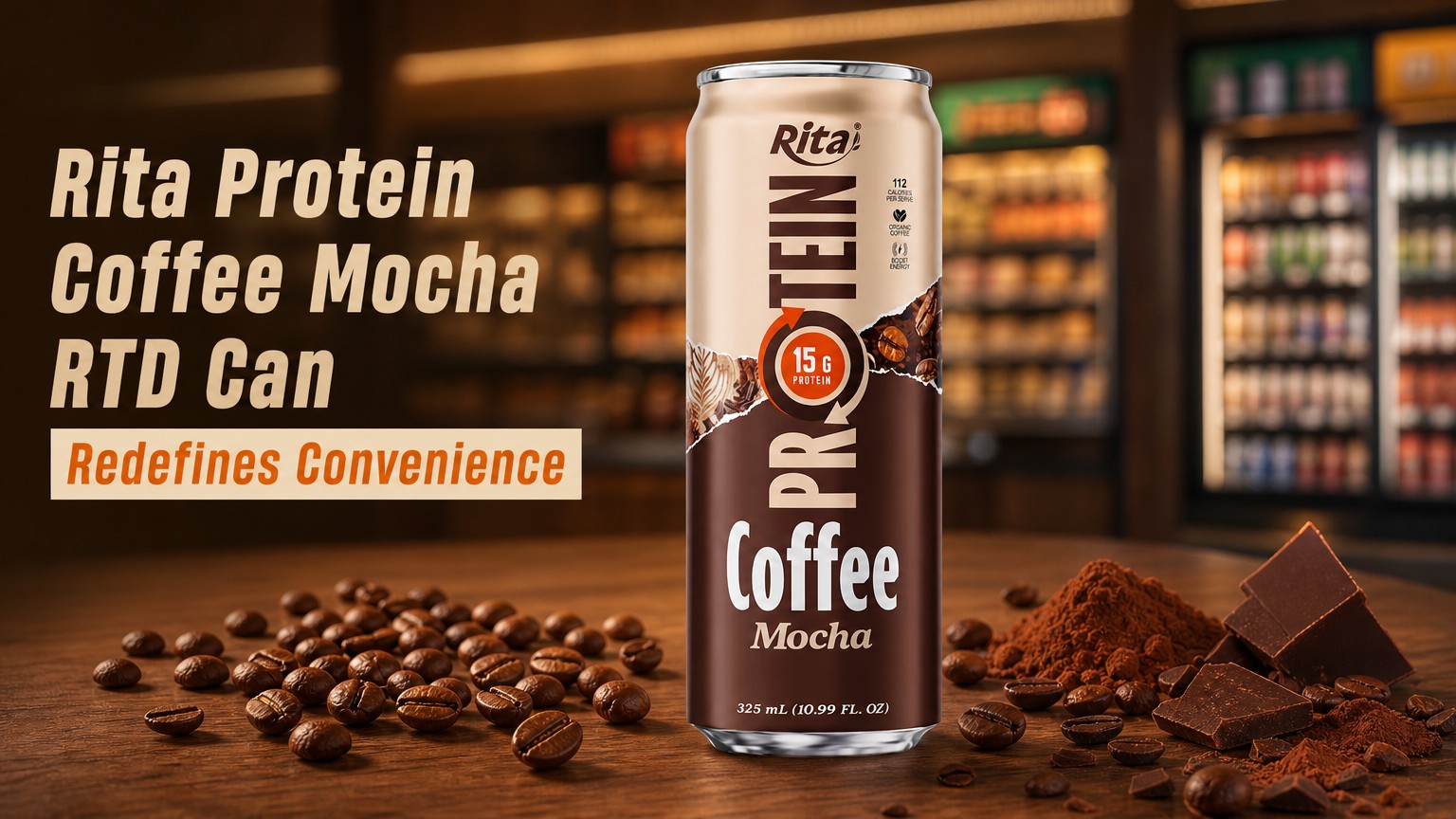
RITA Vanilla Protein Coffee arrives at a moment when the ready-to-drink coffee aisle is being redrawn around flavor variety and protein content. The 325ml slim aluminum can pairs a creamy vanilla latte profile with 15 grams of protein, aimed at the occasions when coffee is bought one can at a time: the morning commute, the desk-side break, the walk from the station. Protein has moved beyond specialist shelves, and flavored coffee formats are pulling the ingredient into the mainstream chilled set. For importers, category managers and private label buyers, the question is whether a vanilla protein can sits comfortably beside established canned lattes, and what kind of supply platform keeps it there for the long run.
Key Takeaways
- 15g of protein in a 325ml slim can positions the product for routine grab-and-go purchases rather than specialist retail.
- Vanilla leads a three-flavor range alongside Cream Latte and Mocha, giving retailers a coherent set to merchandise together.
- Single-serve chilled cans match the convenience store coffee culture of Japan and Korea.
- RITA operates as an OEM and ODM manufacturer with BRC, FSSC 22000, Halal, Kosher, ISO, GMP and HACCP certifications.
- Flexible MOQ, 20 to 25 day lead times and capacity near 600 twenty-foot containers per month support scaled orders.
Grab-and-Go Coffee Culture Creates an Opening for Vanilla Protein Coffee
Coffee in Japan and Korea is bought one can at a time. Decades of vending machines and chiller walls have trained shoppers to expect a chilled format at every corner.

That habit plays out differently across regions. On Honshu, Hokkaido, Kyushu and Shikoku, canned coffee sits beside tea and juice in convenience store sets that turn over quickly, while in Seoul, Busan, Incheon, Daegu, Daejeon and Gwangju, chilled shelves have widened to include flavored and protein-forward variants. Retailers in both markets are expanding what counts as coffee, and a can that carries a clear protein figure competes for attention in a way a plain black coffee does not. Distribution is equally fragmented: vending banks, station kiosks, supermarket chillers and office pantries all draw from the same slim-can format, which means one SKU can travel across several channels without re-engineering the pack.
Vanilla is a low-friction entry point for that expansion. It softens the roasted base into something closer to a cafe latte, which makes the move from a familiar canned latte to a protein version feel incremental rather than experimental. Shoppers scanning a shelf for a quick decision tend to land on flavors they can already picture, and vanilla is one of the most widely recognized cues in the category. The result is a product that asks for less persuasion at the point of sale.
Occasion coverage is the other half of the pitch. A single can has to work at 7 a.m. on a platform, at a desk mid-morning, and in a bag heading out for the weekend. Because the format needs no preparation and no refrigeration until it is opened, buyers can place it in several locations at once without adding complexity to the assortment.
What a single-serve protein can has to deliver
Format matters as much as formulation in this channel.
- A flavor profile that reads instantly on the label and holds up when served chilled straight from the can.
- A visible protein figure, here a circular 15G PROTEIN badge placed at the center of the design.
- A slim silhouette that fits cup holders, cooler bags and the narrow slots in vending coils.
- Shelf-ready color blocking so shoppers can tell Vanilla, Cream Latte and Mocha apart at a glance.
- No preparation step, since the can is opened and consumed where it is bought.
From the Highlands to the Can: Coffee Sourcing
Coffee quality starts well before roasting, and the sourcing conversation around a canned latte usually begins with where the beans come from and how the crop is handled at harvest.
Consistency is where sourcing becomes a commercial issue. Buyers building a chilled coffee program need the same taste from the first container to the tenth, and that repeatability depends on how raw material is selected, stored and matched across batches before it ever reaches a recipe. It is the least visible part of the product and often the most decisive for repeat orders.
RITA has documented that journey directly. Company teams have travelled to Vietnam's coffee gardens during peak harvest season to follow the crop from the highlands through selection and processing, part of a wider practice of inspecting raw material areas before they enter production. For a buyer asking how a protein coffee keeps a consistent profile from batch to batch, that kind of traceable sourcing is a reasonable starting point for due diligence.
The harvest visit is also available on video, offering a look at the gardens and the picking season behind the beans used in RITA's coffee range. https://www.youtube.com/watch?v=F2yJLjUYiuo
Packaging and Label Design That Reads on a Chilled Shelf
The can does most of its selling before the tab is pulled.
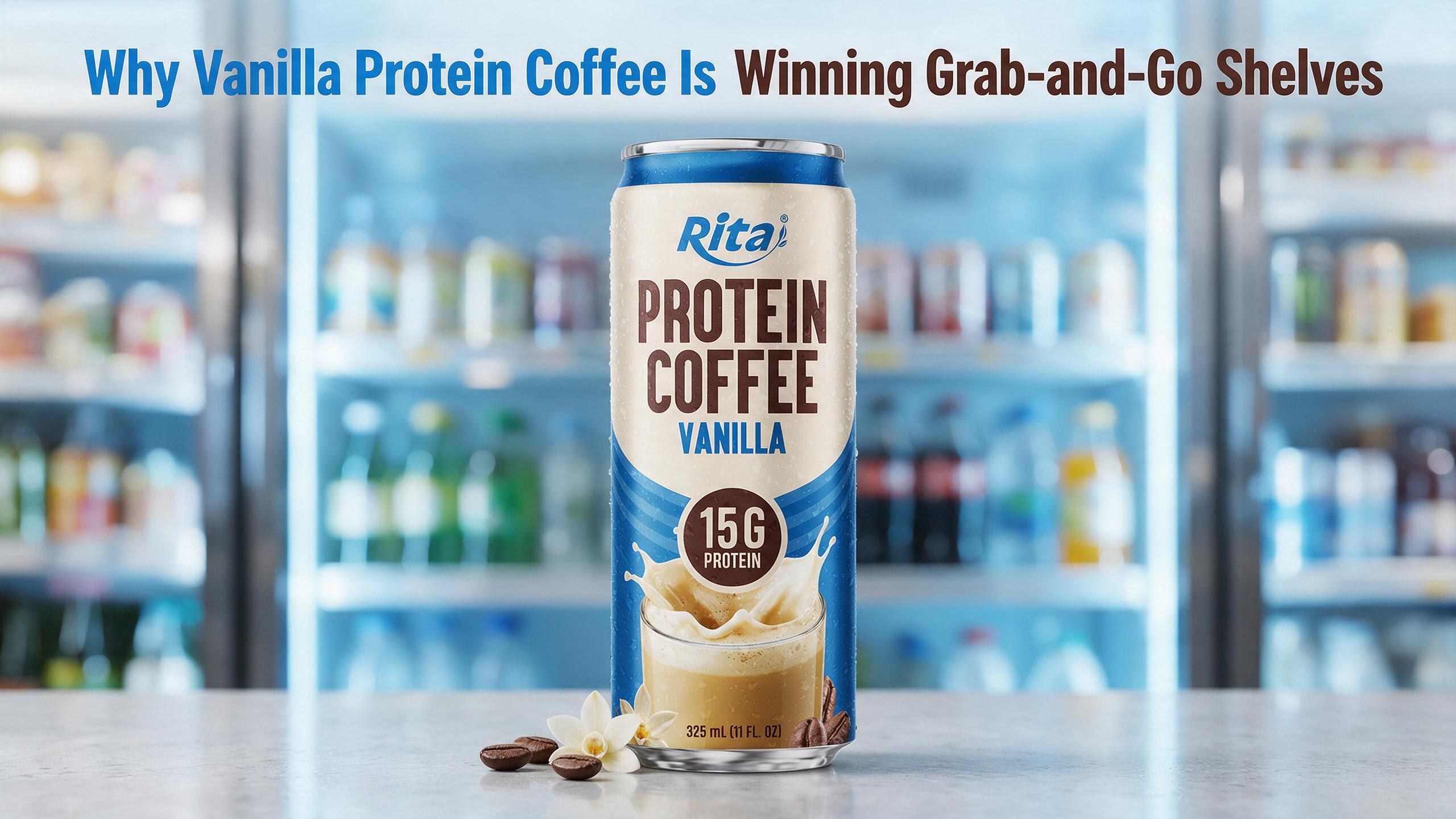
The 325ml (11 FL. OZ) slim aluminum can carries silver top and bottom rims and a tall, narrow silhouette. Its label pairs a warm cream upper half with a bright sky-blue band, the blue RITA mark at the top, PROTEIN COFFEE set in brown capitals and VANILLA beneath it in blue. A brown circular medallion highlights the 15G PROTEIN callout at the center, while a photographic splash of light-brown coffee and milk rises across the middle of the can. A vanilla orchid sits at the lower left, a small cluster of roasted beans at the lower right, and blue ripple lines behind the splash add a cool, modern note that suits a wellness-minded shelf.
Color blocking is doing deliberate work here. In a chiller where most cans are brown, beige or black, the cream-and-sky combination reads as lighter and more contemporary, which helps the range attract shoppers who are not actively looking for coffee. The badge placement is equally intentional: the protein figure sits where the eye lands first, so the differentiator is registered before the flavor name is read.
Three flavors, one merchandising system
Vanilla is one entry in a three-can range, and the set is designed to be blocked together rather than sold as a lone item.
- Vanilla leads with a rounded, creamy sip and the cream and sky-blue label treatment.
- Cream Latte offers a more classic milk-coffee profile for shoppers who want a familiar baseline.
- Mocha rounds out the set with a cocoa-leaning profile for afternoon occasions.
| Variant | Tasting profile | Merchandising role |
|---|---|---|
| Vanilla Protein Coffee | Vanilla aroma, gentle roasted note, soft dairy finish | Range anchor and trial driver |
| Cream Latte | Classic milk-coffee balance | Everyday repeat purchase |
| Mocha | Cocoa-leaning roasted profile | Afternoon and treat occasion |
RITA's Export Platform Behind the Can
RITA Food and Drink Co., Ltd, established in 2004, is a Vietnamese OEM and ODM beverage manufacturer that supplies brands in more than 180 countries, with export coverage reaching over 200 countries and territories. The company runs more than 50 automated production lines and ships over 1,200 containers per month, a scale that supports large-volume programs as well as smaller market tests. Its portfolio spans tropical fruit juices, coconut products, functional drinks, energy drinks and coffee, packed in aluminum cans, glass bottles, PET and PP.
Certification coverage is the part of that platform buyers usually check first. The portfolio includes BRC, FSSC 22000, Halal Jakim, Halal HCA-GCC, Kosher, ISO, GMP, HACCP and SMETA, and the specific set applicable to a given SKU is confirmed per product. The full specification for RITA Vanilla Protein Coffee 325ml can with 15g protein covers volume, packaging, payment terms and certification scope, giving procurement teams a single reference for technical review.
Coffee formats sit within a broader catalog, and buyers comparing adjacent categories often start with the ready-to-drink coffee drink range before widening into milk-based or tea-based lines. That cross-category view matters when a retailer is building a chilled set rather than adding a single item.
| Order parameter | Detail |
|---|---|
| Volume | 325 ml (11 FL. OZ) |
| Packaging | Aluminum slim can |
| Payment terms | L/C, T/T |
| Delivery time | 20 to 25 days after order confirmation |
| Port of loading | Ho Chi Minh Port, Vietnam |
| Supply ability | 600 twenty-foot containers per month |
| MOQ | Flexible, discussed per program |
Private label work is where the OEM side of the business becomes relevant. The same platform that produces branded cans can carry a retailer's own artwork, and the free sample route lets a buyer evaluate the vanilla profile before committing to artwork and volume. For an OEM beverage export program, the decision usually turns on three things: whether the flavor survives the journey, whether documentation clears customs without friction, and whether capacity exists to refill quickly once a listing performs.
Market Signals and Industry Backdrop
The wider beverage industry is in a recalibration phase. Heineken's acquisition of Brazilian beer and yerba-mate company Better Drinks, Zevia's raised full-year forecast after a strong third quarter, and executive-level changes at Super Bock and Castel all point to a sector where growth is being bought, reorganized or forecast rather than assumed. Reports that a Russian firm is seeking control of Coca-Cola HBC assets add a reminder of how quickly ownership questions can reshape distribution routes.
For a single SKU such as a vanilla protein coffee can, those headlines matter mainly as a signal of where capital and attention are flowing: toward flavored, convenient formats that can be scaled across borders without a long explanation at the shelf. The data below frames that opportunity in trade terms.
Where Buyers Can Act Next
Why Vanilla Protein Coffee fits private label programs
For a distributor evaluating the range, the practical starting point is the vanilla protein coffee product page, where volume, packaging, certification and lead time are listed together. Samples ship ahead of any volume commitment, which lets a category team test the vanilla profile against the existing canned coffee lineup before a listing decision is made.
The protein angle also sits comfortably next to dairy-led lines, so buyers who already merchandise milk-based drinks can extend the set with a milk series assortment and place the protein can alongside it rather than in a separate bay. That adjacency tends to simplify planograms and reduces the number of facings a new item has to compete for.
Lead time runs 20 to 25 days from order confirmation out of Ho Chi Minh Port, with flexible MOQ available for trial shipments and full container programs alike. The same specification page for RITA Vanilla Protein Coffee 325ml can with 15g protein is the reference to circulate internally when procurement, quality and commercial teams need one shared document.
Frequently Asked Questions
What is RITA Vanilla Protein Coffee?
It is a ready-to-drink coffee in a 325ml slim aluminum can that combines a creamy vanilla latte profile with 15 grams of protein per serving. It is part of a three-flavor range that also includes Cream Latte and Mocha.
How much protein does each can contain?
Each 325ml can carries 15 grams of protein, highlighted by a circular badge at the center of the label so the figure is visible before the can is picked up.
What is the recommended serving format?
The drink is produced as a chilled, ready-to-drink format with no preparation required. Serving it cold keeps the vanilla character bright and the roasted coffee note balanced.
Which certifications support export of this product?
RITA's certification portfolio includes BRC, FSSC 22000, Halal Jakim, Halal HCA-GCC, Kosher, ISO, GMP, HACCP and SMETA. The subset applicable to this SKU is confirmed on the product specification.
What are the standard order terms?
Packaging is a 325ml aluminum can, payment is by L/C or T/T, delivery runs 20 to 25 days after order confirmation, loading port is Ho Chi Minh Port, and MOQ is flexible with a supply ability of 600 twenty-foot containers per month.