

Why Lemon Lime Prebiotic Soda Is Winning Over Modern Shoppers
TABLE OF CONTENTS

Consumer demand for bright, convenient canned beverages is reshaping shelf strategy across East Asia, and Lemon Lime Prebiotic Soda has emerged as one of the most discussed formats of the year. Produced by RITA Food and Drink Co., Ltd., the 330ml short can pairs a crisp citrus profile with a modern prebiotic formula, arriving at a moment when retail buyers in Japan and Korea are refreshing their carbonated lineups. For procurement teams evaluating suppliers, the listing for RITA Lemon Lime Prebiotic Soda sets out specifications, certifications and export terms in one place.
Key Takeaways
- RITA's Lemon Lime Prebiotic Soda delivers a zesty lemon-and-lime taste with a prebiotic formula in a 330ml short can.
- Convenience chains across Japan and Korea are slotting the format into commuter, lunchtime and desk-side occasions.
- RITA Food and Drink Co., Ltd. runs 50+ automated production lines and exports to more than 200 countries and territories.
- Certifications including BRC, FSSC 22000, ISO, HACCP, GMP and Halal support compliance reviews by regional buyers.
- Flexible OEM and ODM programs, a 20 - 25 day lead time and flexible MOQ keep private label trials realistic.
Why Lemon Lime Prebiotic Soda Is Winning Shelf Space in Japan and Korea
Bright citrus cans are moving quickly at checkout counters from Tokyo to Seoul, and buyers are taking notice.
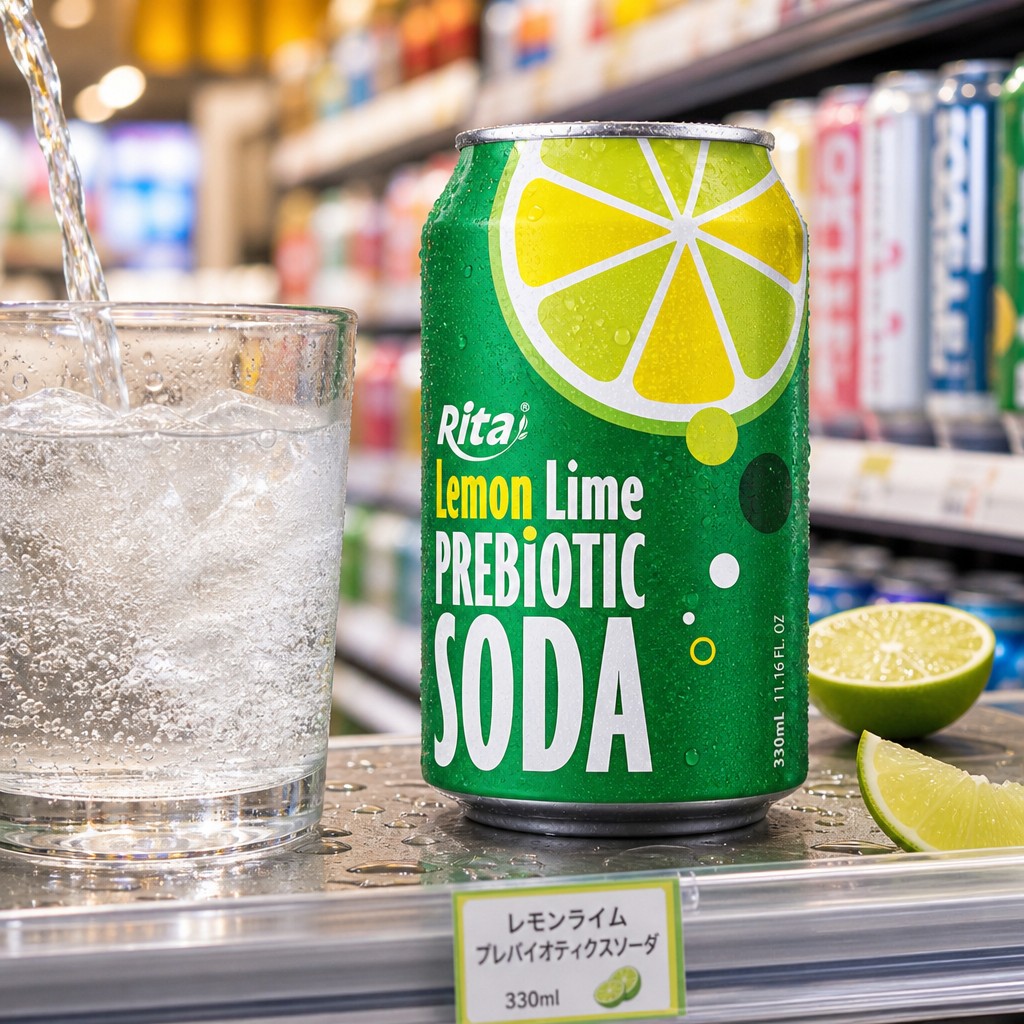
The shift is visible across Honshu, Hokkaido, Kyushu and Shikoku, where convenience chains rotate small-format drinks to match commuter routines. In South Korea the same pattern shows up in Seoul, Busan, Incheon, Daegu, Daejeon and Gwangju, where 330ml cans slot neatly into lunch bags and desk drawers. Against that backdrop, Lemon Lime Prebiotic Soda has found a natural audience: shoppers who want a crisp, zesty pour without committing to a larger bottle.
Category observers point to a wider consumer mood rather than a single campaign. Shoppers gravitate toward cans that read as modern, portable and easy to understand at a glance. A vivid green body with citrus artwork communicates the flavor before the tab is even pulled, which matters in a fixture where decision time is measured in seconds.
Convenience That Fits Modern Routines
The 330ml short can is deliberately compact. It fits standard cup holders, bento compartments and the narrow side pockets of commuter bags, a detail that matters in dense urban retail environments where shelf depth is limited. Retailers in high-traffic locations favour formats that stack efficiently and survive handling without denting.
Portability also shapes consumption occasions. A can opened during a short break in Daegu, a train ride out of Incheon or an afternoon walk along the Honshu coast requires no glass, no opener and no planning. That low-friction experience keeps the product in regular rotation rather than in the occasional-purchase column, and repeat occasions are what build a stable weekly rate of sale.
Serving temperature is the other half of the equation. Chilled placement in front-of-store coolers sharpens the lemon-lime contrast, while ambient stock in pantry aisles still performs for shoppers buying multiples for the home fridge. Retailers can therefore merchandise the same SKU in two locations without reworking the planogram.
A Flavor Profile Built for Repeat Purchase
Taste remains the deciding factor at the second purchase. RITA's formulation leans on the sharp tang of lemon balanced by lime, delivering a clean finish and a steady stream of carbonation that holds from the first sip to the last. The prebiotic element is presented simply on-pack, keeping the message focused on flavor and format.
When a flavor is easy to describe, it becomes easy to recommend across a group or an office floor.
That clarity also simplifies staff training and shelf talkers. Store teams can explain the product in a single sentence, and shoppers who enjoyed the first can know exactly what they are repurchasing. In categories where novelty churn is high, straightforward flavor identity is a quiet advantage.
Inside the 330ml Short Can
Packaging does much of the selling before the first taste, and this can is built to be noticed.
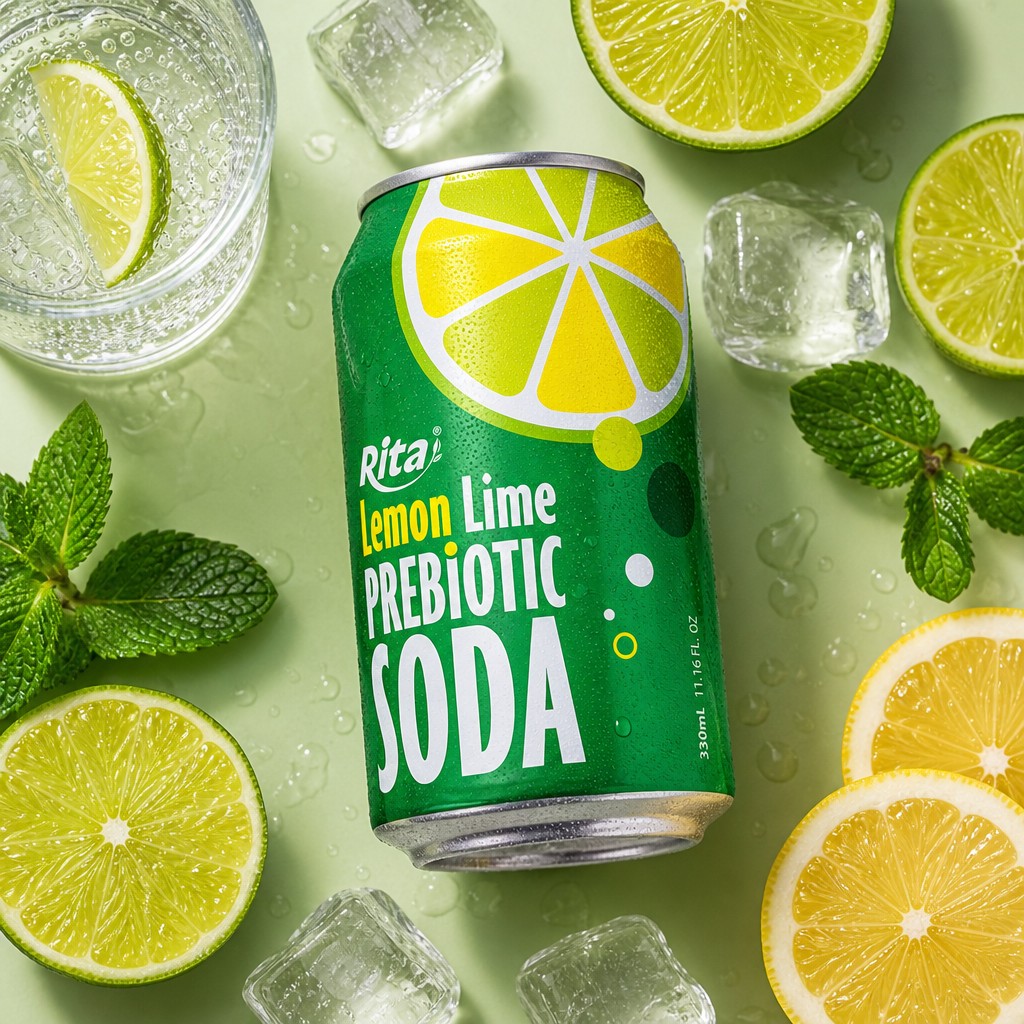
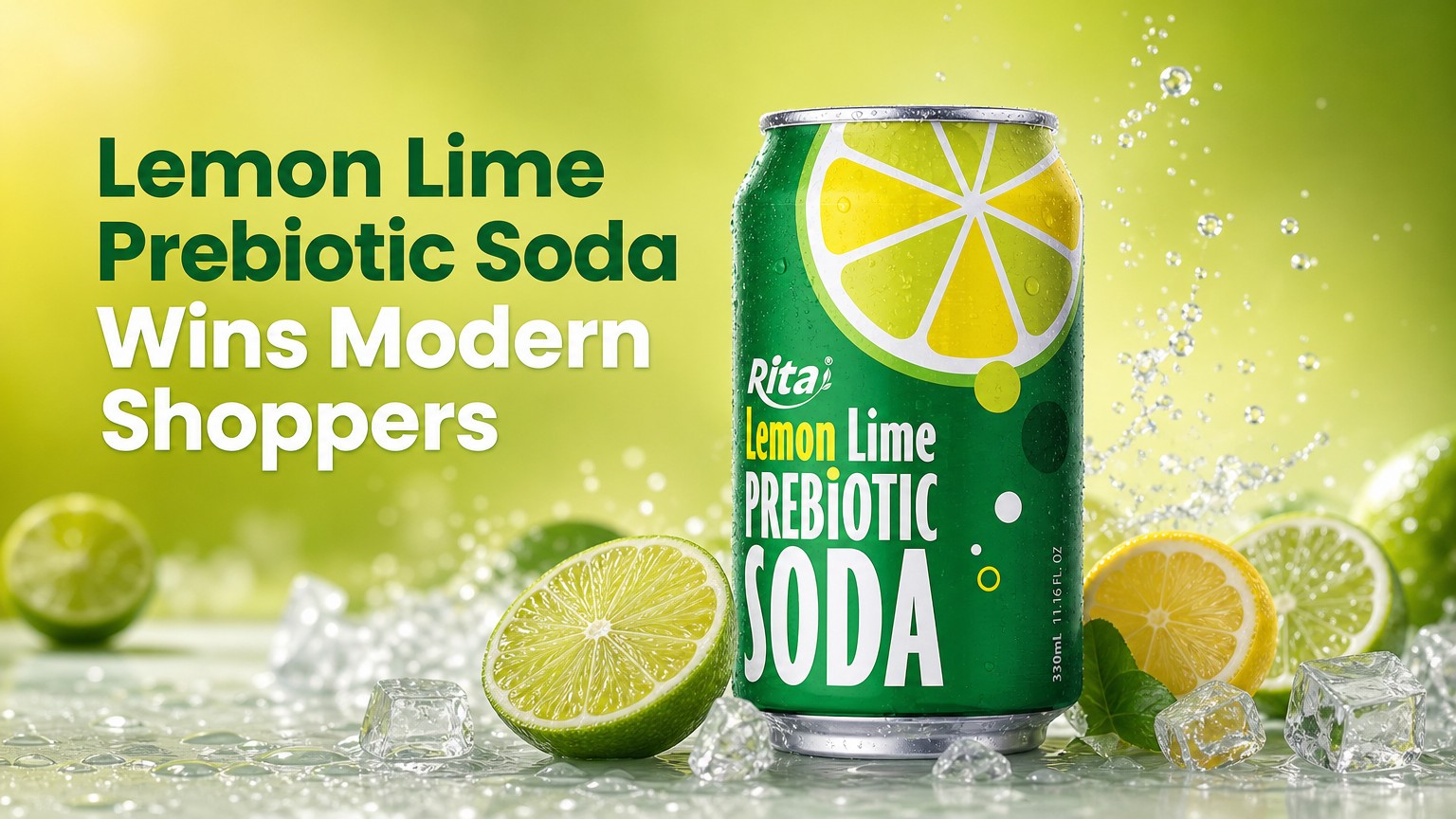
The can carries a vivid green background with the RITA wordmark in white, the words Lemon Lime in yellow and PREBIOTIC SODA in clean white type. A sliced lime illustration sits near the top, ringed by multicoloured bubbles, while 330mL and 11.16 FL. OZ run vertically along the right edge. Yellow and light-green fruit segments break up the field, giving the pack a fresh, contemporary look that photographs well for social posts and shelf displays alike.
Beyond aesthetics, the aluminium construction protects the soda's effervescence and flavor. Light and air are held at bay, so the carbonation level specified at filling is what reaches the consumer, whether the can is chilled in a vending machine in Busan or shipped across an island to Shikoku. The material is also widely accepted by return and recycling schemes across both markets.
Compared with PET alternatives, the short can chills faster and occupies less shelf depth per serving, two practical points that influence planogram decisions. For distributors weighing formats, the trade-off usually comes down to transport efficiency versus visual impact, and aluminium tends to win on both counts for premium-looking citrus lines.
| Specification | Detail |
|---|---|
| Volume | 330 ML |
| Packaging | Aluminium short can |
| Shelf life | 24 months |
| Certifications | ISO, HACCP, HALAL, FSSC, GMP, BRC |
| Delivery time | 20 - 25 days after order confirmation |
| Port | Ho Chi Minh Port, Vietnam |
| Supply ability | 600 Twenty-foot Containers per Month |
Full technical detail, sample requests and current pricing for the Lemon Lime Prebiotic Soda 330ml short can are published on the product listing, giving buyers a single reference point for specification checks before a quotation is requested.
From the Mekong Delta, Where Citrus Batches Begin
Every can starts with raw material decisions made long before the line runs, out in the field.
RITA's ingredient sourcing draws on Vietnam's Mekong Delta, a region whose warm climate and alluvial soils support year-round citrus and tropical fruit cultivation. The company's account of the Mekong Delta as a high-quality raw material area sets out how supplier selection and intake checks are handled before fruit enters production.
Buyers who want a visual sense of the sourcing landscape can watch the company's field footage of the delta's growing areas at https://www.youtube.com/watch?v=jiBixXjeG8A
Consistent raw material quality matters more than it once did. Retailers in Japan and Korea run tight specifications for acidity, sweetness and colour, and batch-to-batch variation shows up quickly on shelf. Sourcing discipline upstream keeps the finished soda predictable across production runs, which in turn protects the rate of sale that buyers forecast at listing.
Manufacturing Scale and Export Certifications Behind the Can
Behind a single can sits an export operation built over two decades and tested across continents.
RITA Food and Drink Co., Ltd. was established in 2004 and has grown into a leading Vietnamese OEM/ODM beverage manufacturer supplying brands in more than 180 countries, with products reaching over 200 countries and territories overall. The company operates 50+ automated production lines and ships 1,200+ containers each month, covering aluminium cans, glass bottles, PET and PP formats across juices, coconut products, functional drinks, energy drinks and carbonated beverages. That scale positions RITA as a carbonated drink manufacturer able to absorb large repeat orders while holding lead times steady.
The soda sits within RITA's carbonated drink catalog, where buyers can compare formats and flavour directions before committing to a specification. That comparison step shortens the sampling cycle for teams assessing several SKUs at once.
Quality documentation is a gating item for regional importers. This product carries ISO, HACCP, Halal, FSSC and GMP credentials, while the wider company portfolio holds BRC, FSSC 22000, Halal Jakim, Halal HCA-GCC, Kosher, ISO, GMP, HACCP and SMETA. Having those files ready shortens compliance reviews with retail chains, duty-free operators and online marketplaces.
- Aluminium can, 330ml short format with a 24-month shelf life
- Flexible MOQ for trial orders and scalable repeat runs
- FOB pricing on request, shipped from Ho Chi Minh Port
- L/C and T/T payment terms for cross-border contracts
OEM and ODM Programs for Regional Brands
Private label demand has been steady, and RITA's soft drinks portfolio gives partners a starting point for custom flavour work. From base recipe adjustments to can artwork and case configuration, the OEM team scopes each project against the buyer's target cost and shelf position, acting as an OEM beverage supplier rather than a fixed-catalogue wholesaler.
Flexible MOQ and a 20 - 25 day lead time keep trial runs realistic for mid-size distributors testing a new citrus line.
Development cycles typically move from brief to sample in a matter of weeks, after which artwork approval and production scheduling follow. For chains running seasonal promotions, that pace allows a can to be designed, filled and shipped inside a single planning window, which is also when canned soda export volumes tend to peak.
Broader Beverage Headlines Set the Tone
The wider drinks trade has been busy. Diageo and Pernod Ricard's Scotch imports are under investigation in India, Amber Beverage UK has entered administration, and Diageo faces a separate probe over a toxic spill incident in Scotland. Canned Wine Group has acquired the South African brand New Theory, while Pernod, Suntory and De Kuyper are lined up as speakers at the upcoming Just Drinks spirits conference.
None of it touches citrus soda directly, yet the mood carries over into buying decisions.
When premium alcohol headlines turn uncertain, buyers often protect volume in accessible, everyday categories. Canned refreshments with clear flavour cues and dependable supply act as a practical counterweight, which is one reason formats like prebiotic soda continue to attract shelf space even as spirits narratives fluctuate.
Consolidation elsewhere in the sector also signals that scale and documentation are becoming differentiators. Buyers increasingly favour suppliers who can demonstrate capacity, certification depth and consistent lead times across large orders, rather than relying on spot purchases from a rotating list of vendors.
Private Label Pathways for the Lemon Lime Prebiotic Soda
For distributors, the fastest route to a differentiated can is a private label brief.
RITA accepts OEM and ODM briefs on the Lemon Lime Prebiotic Soda 330ml short can, covering recipe tweaks, sweetener profiles, carbonation levels and label artwork. Free samples are available to qualified buyers, payment terms run through L/C or T/T, and FOB pricing is quoted on request. Shipments leave Ho Chi Minh Port against a stated supply capacity of 600 twenty-foot containers per month.
How Retail Teams Use the Format
Private label soda programs typically start with a reference sample, followed by adjustments to sweetness, acidity and carbonation until the target profile is agreed. Artwork is then adapted to the retailer's brand system while retaining the practical advantages of the 330ml short can.
That combination of documentation, capacity and lead time is what regional buyers weigh when selecting a supplier for a multi-year programme. It also explains why Lemon Lime Prebiotic Soda continues to be shortlisted by retail teams refreshing their chilled beverage sets in Tokyo, Sapporo, Fukuoka, Seoul and beyond.
Frequently Asked Questions
What is RITA Lemon Lime Prebiotic Soda?
It is a sparkling citrus beverage in a 330ml short aluminium can, combining the crisp tang of lemon and lime with a prebiotic formula. The pack carries a vivid green design with a sliced lime illustration and is positioned for everyday, on-the-go occasions.
What packaging and shelf life does the 330ml short can offer?
The product is filled in a 330 ML aluminium short can with a 24-month shelf life, which supports long shipping routes and extended distribution cycles for importers.
Which certifications support export of this soda?
The product is produced under ISO, HACCP, HALAL, FSSC and GMP standards, and the wider company portfolio also holds BRC, FSSC 22000, Halal Jakim, Halal HCA-GCC, Kosher and SMETA credentials.
Can RITA produce this soda under a private label?
Yes. RITA offers OEM and ODM solutions covering flavour adjustment, carbonation level, artwork and case configuration, with free samples for qualified buyers and flexible MOQ.
What are the order terms and lead time?
Payment terms are available via L/C or T/T on FOB basis, delivery is 20 - 25 days after order confirmation, and shipments depart Ho Chi Minh Port, Vietnam.