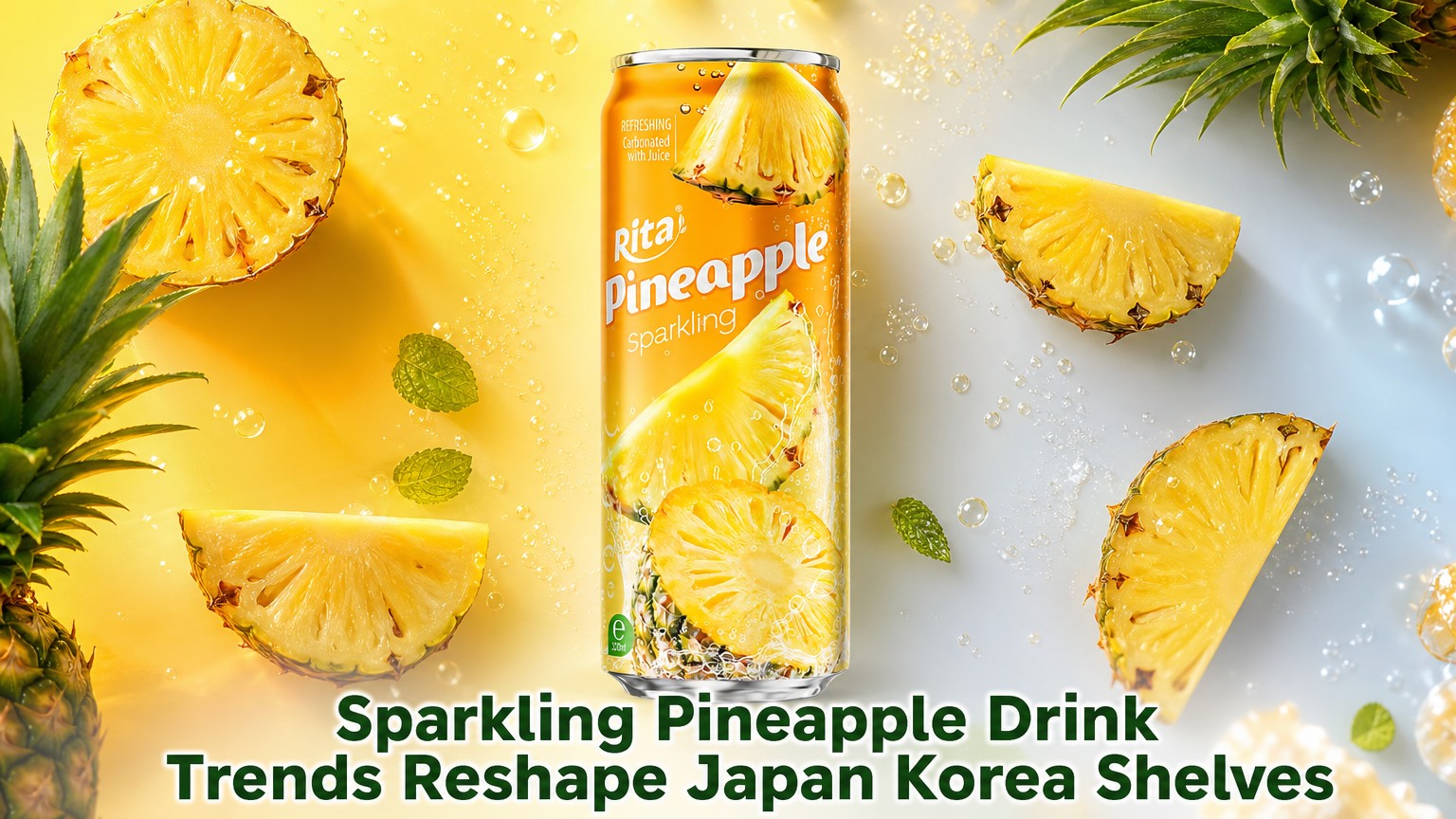


Rita Orange Carrot Juice Wins Over Japan and Korea Shoppers
TABLE OF CONTENTS

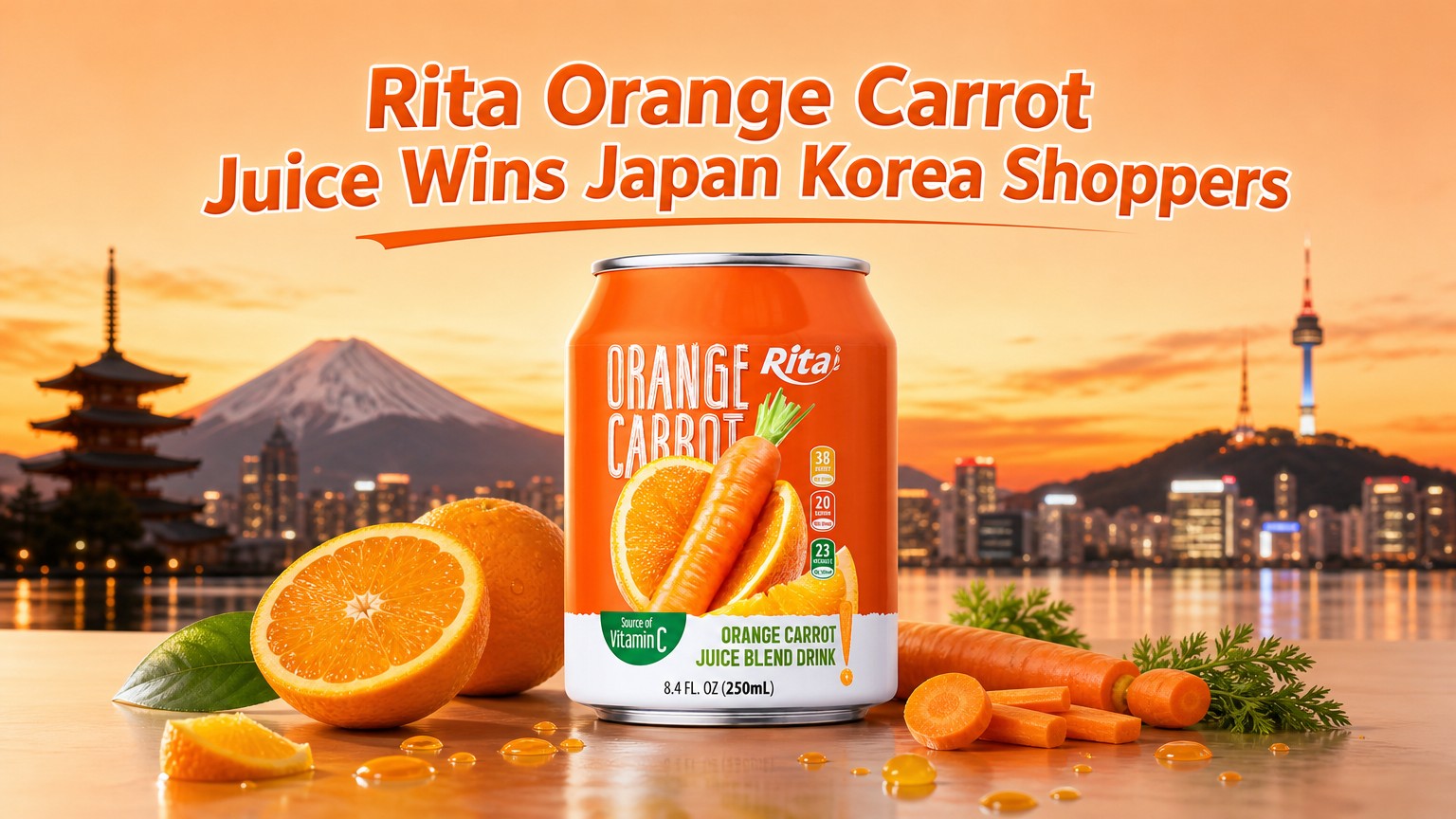
Consumer behavior across Japan and Korea is tilting toward smaller, purposeful servings, and the Rita Orange Carrot Juice Tasty Refreshment 250ml Short Can is arriving exactly where that shift is heading. Shoppers opening cooler doors in Seoul, Tokyo, Fukuoka or Busan increasingly reach for a compact can that can be finished in one sitting rather than a bottle that lingers in the refrigerator for days. This article examines how portion sizing, flavor expectations and sourcing transparency are converging to shape demand for blended juice drinks, and what that means for importers, retailers and private label partners evaluating Vietnamese supply options.
Key Takeaways
- Single-serve formats are gaining ground as planned consumption replaces all-day sipping.
- The 250ml short can combines portion control, stability and portability for urban routines.
- Orange-carrot blends sit where familiar citrus taste meets growing interest in vegetable-inclusive flavors.
- RITA Food and Drink Co., Ltd pairs OEM flexibility with the certifications Japanese and Korean buyers request.
- Traceable sourcing from orchard and field to can is becoming a purchasing signal rather than a marketing extra.
Consumer Behavior Reshapes Demand for Rita Orange Carrot Juice
Momentum has shifted toward beverages that get finished rather than stored.
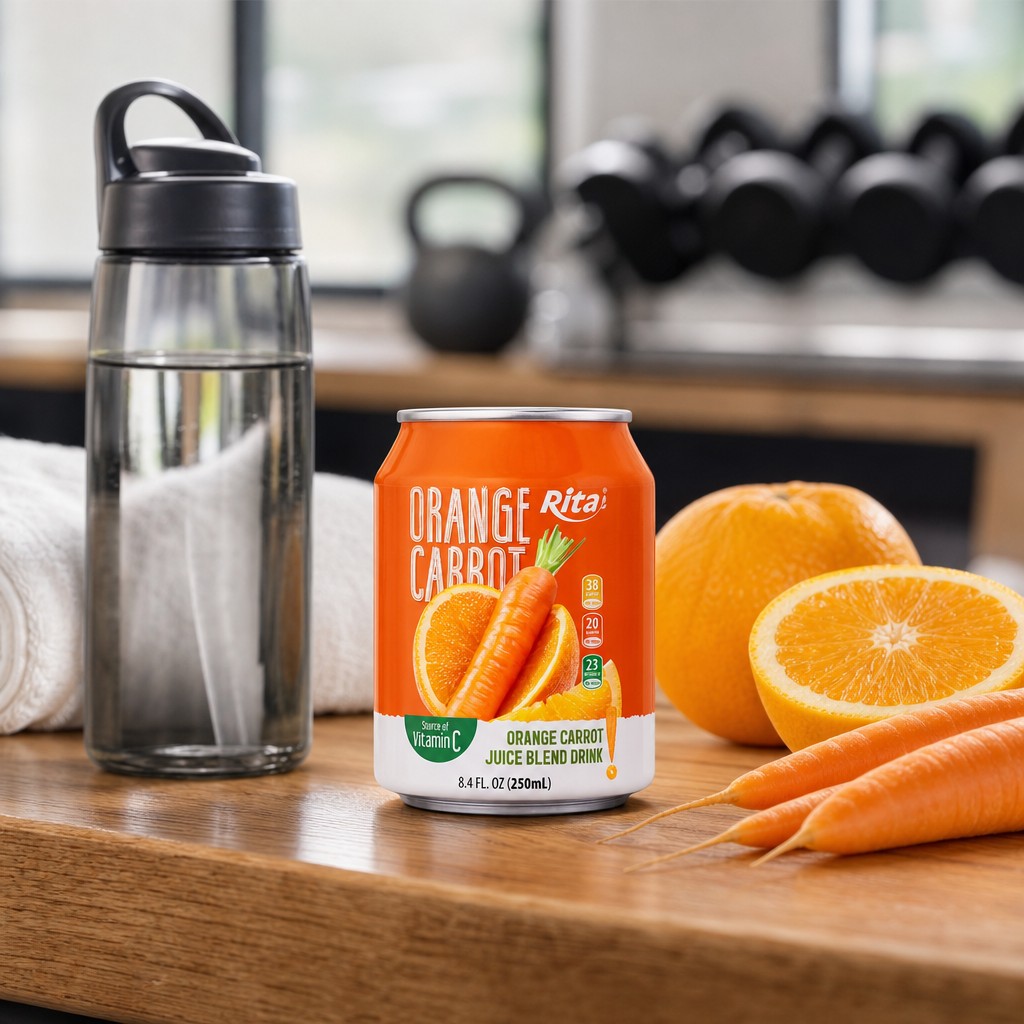
Across Japan and Korea, the purchase decision increasingly begins with a practical question: how much will I actually drink in this moment? Convenience store operators in Tokyo and Seoul have responded by widening their single-serve shelves, and shoppers have rewarded that move with steady repeat trial. The result is a buyer profile that treats a can as a complete occasion rather than a container to portion out over two days. For blended drinks, this matters because the format sets expectations about intensity, freshness and taste delivery before the tab is even pulled.
Retail data conversations with category managers point to a consistent pattern. Trips are shorter, baskets are more deliberate, and impulse purchases lean toward items that promise a defined experience. A compact juice can answers that promise without asking the shopper to plan around leftovers. It also fits the rhythm of transit-heavy cities where drinks are consumed on platforms, in taxis or between meetings rather than seated at a table.
Smaller Formats and Planned Consumption
Portion awareness has become a routine part of basket building. A 250ml serving is small enough to accompany a commute, a study session or a mid-afternoon desk break without turning into a commitment. That predictability is exactly what planners appreciate, because the can ends when the moment ends.
Retailers have noticed the pattern too. Multi-pack purchases of small cans often sit alongside single-can trials, suggesting that shoppers buy in quantity but consume individually. For importers, that combination is attractive because it supports both volume contracts and repeat trial. The Rita Orange Carrot Juice short can slots neatly into that behavior, offering a serving size that matches how people actually drink during a working day rather than how a marketing brief imagines they might.
Flavor Expectations in Urban Markets
Citrus remains one of the most reliable entry points in Asian juice aisles. Orange reads as familiar, bright and easy to place on a shelf, which lowers the barrier for first-time trial in a crowded cooler.
Carrot adds a second layer that shoppers have grown curious about. Its natural sweetness rounds out the sharper edge of orange, and the pairing gives the blend a fuller body than a straight citrus juice. Consumers describe the experience as a citrus lift followed by a smoother, earthier finish, with a consistency that feels closer to a blended drink than a thin nectar. That progression is a talking point at shelf, and it helps the product travel across different regional preferences, from Hokkaido to Gwangju, without requiring a reformulation for each market.
Why the Rita Orange Carrot Juice Short Can Fits Modern Consumption
The can was designed around the way people actually drink.
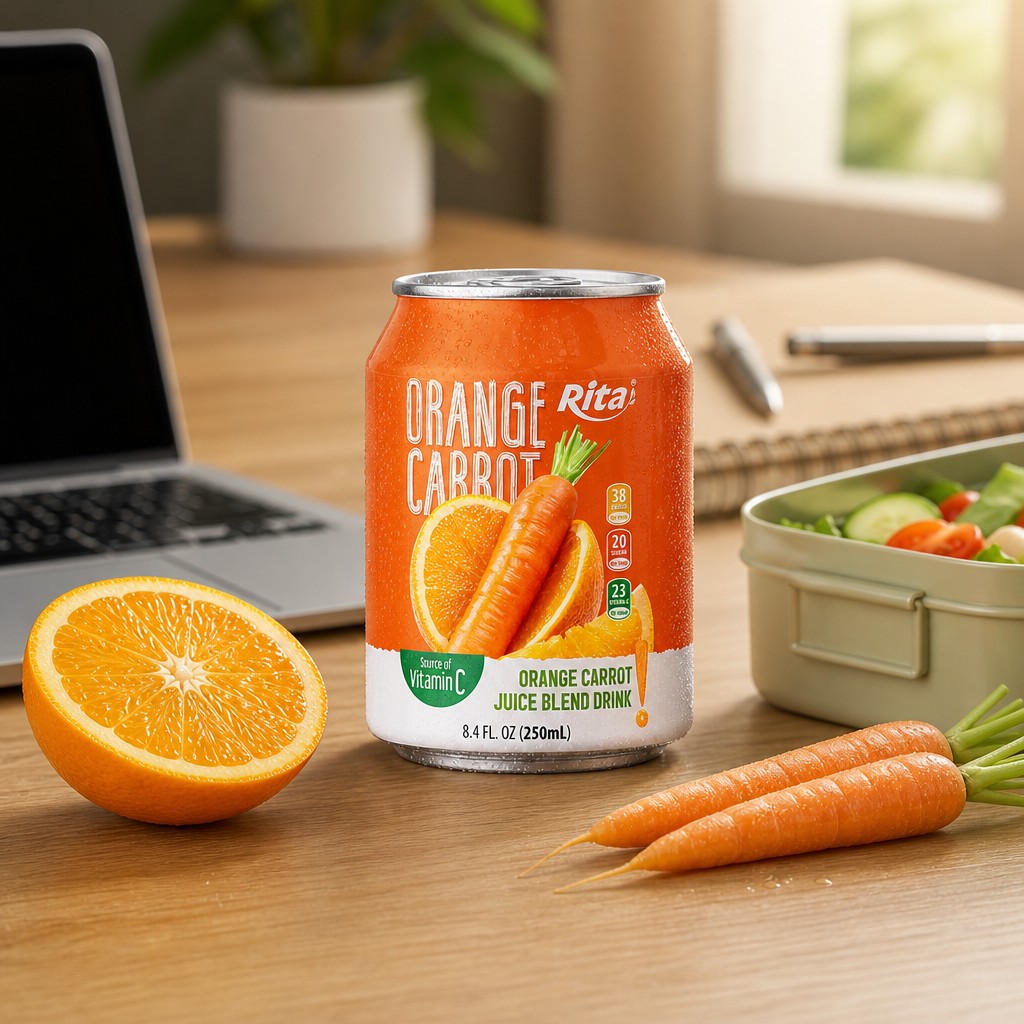
At 250ml, the short can carries a wide base and a low center of gravity, which makes it stable on a crowded desk, a train tray table or a picnic blanket. The compact silhouette also uses less shelf depth per unit, a detail that category managers notice when planning facings and cooler layouts. Beyond logistics, the format signals a complete serving. There is no resealing, no leftover and no negotiation with a half-finished bottle at the back of the refrigerator, which aligns with the planned-consumption habit described above.
- Portion clarity — one can equals one planned serving, simplifying purchase decisions at shelf.
- Stability — the wide, low profile resists tipping during transit and on uneven surfaces.
- Portability — the compact size fits lunch bags, backpacks and narrow convenience coolers.
- Shelf efficiency — shorter cans allow denser stacking and flexible display arrangements.
The material choice matters as well. Aluminum protects the blend from light and delivers rapid chill-down after refrigeration, which suits impulse occasions where the drink is consumed within minutes of purchase. It also recycles cleanly, a point that procurement teams in both Japan and Korea increasingly include in supplier questionnaires.
For private label partners, the short can is a flexible canvas. RITA supports OEM and ODM programs, so the same 250ml format can carry a retailer's own artwork, language variants and regulatory copy for different prefectures or provinces. Buyers reviewing the Rita Orange Carrot Juice Tasty Refreshment can will find a format that already matches the visual and practical expectations of urban Japanese and Korean consumers, which shortens the path from sample approval to shelf placement.
From Our Orchards and Fields Sourcing the Blend
Origin stories are moving from brochure copy to purchase criteria.
The citrus side of the blend traces back to RITA's orange orchards in Vietnam, where fruit is selected for juice yield and flavor consistency before it moves into processing. Buyers who want the full narrative can read our feature on the orange orchards behind RITA Food and Drink Co., Ltd, which follows the fruit from tree to can.
Carrot and complementary root ingredients are sourced through the Mekong Delta raw material area, a region the company has documented as a high-quality ingredient base across its drink portfolio. That regional concentration simplifies supplier audits and gives importers a single sourcing story to relay to their own customers.
A short field-to-can walkthrough is available here: https://www.youtube.com/watch?v=l-x6Vxb_ONQ
Manufacturing Scale and Export Credentials Behind the Can
Behind the compact can sits a supply operation built for volume.
RITA Food and Drink Co., Ltd was established in 2004 and now operates more than 50 automated production lines, exporting over 1,200 containers per month to buyers in more than 200 countries and territories. That scale matters for importers planning rolling orders into Yokohama, Kobe, Busan or Incheon, where delivery windows are tight and consistency across shipments is non-negotiable. Standard lead time sits at 20 to 25 days after order confirmation, and flexible minimum order quantities are available for teams that want to test a market before committing to a full container program.
Certifications Buyers Screen For
Compliance documentation is often the first filter in a Japanese or Korean tender. The portfolio carries a stack of internationally recognized certifications that shorten that review and reduce the number of follow-up questions during onboarding.
| Certification | What it covers for buyers |
|---|---|
| BRC | Global food safety standard recognized by major retail groups |
| FSSC 22000 | Food safety management system certification |
| HACCP | Hazard analysis and critical control points framework |
| GMP | Good manufacturing practice compliance |
| ISO | Quality management system certification |
| Halal Jakim / Halal HCA-GCC | Halal suitability supporting wider regional distribution |
| Kosher | Kosher suitability for expanded retail placement |
| SMETA | Ethical audit framework for supply chain review |
Payment terms are available via L/C and T/T on an FOB basis, and shipments depart Ho Chi Minh Port, which gives buyers a direct line into East Asian routes. Shelf life is listed at 24 months, a figure that supports forward planning and distributed warehousing without rushed turnover. Full specifications, flavor variants and current export terms are maintained on the Rita Orange Carrot Juice product page.
Market Opportunities for Distributors in Japan and Korea
The wider beverage conversation is noisy right now. Spirits headlines dominate trade coverage, from Diageo and Pernod facing scrutiny over Scotch imports in India to Amber Beverage UK entering administration, Diageo facing a separate probe over a spill in Scotland, and Canned Wine Group acquiring South African brand New Theory. Against that backdrop, non-alcoholic canned drinks offer a calmer growth story built on predictable consumption, straightforward labeling and formats that slot into existing cold-chain infrastructure.
For distributors, the opportunity sits in assortment architecture. A compact juice can complements tea, coffee and dairy lines without cannibalizing larger formats, and it gives shelf planners an easy way to add a vegetable-inclusive option at low risk. The blend also performs across dayparts, which reduces the seasonal volatility that some single-flavor launches experience in their first year.
Private Label and Mixed-Container Strategies
Private label remains the fastest route to differentiation for regional chains. Because RITA operates an OEM and ODM service model, a retailer can start from the proven 250ml base and layer on its own brand identity, pack copy and multilingual labeling for prefecture-level or province-level rollout. Flexible MOQs and free sampling make that evaluation stage practical rather than theoretical.
Mixed containers offer a second path. Buyers exploring adjacent options can browse the fruit juice products catalog for complementary flavors, or review the wider fruit juice range to assemble a balanced first order that covers citrus, tropical and blended profiles in a single shipment. The Rita Orange Carrot Juice listing anchors that assortment with a format already familiar to convenience and transit retail buyers.
- Convenience and transit retail, where single-serve cans dominate impulse purchase.
- Office and campus channels that favor planned, portion-controlled servings.
- Seasonal and gift multipacks built around compact, stackable packaging.
- Private label programs seeking a proven 250ml base with artwork flexibility.
Frequently Asked Questions
What is the serving size of Rita Orange Carrot Juice?
The product is filled in a 250ml short can, a single planned serving designed for on-the-go consumption, with a listed shelf life of 24 months.
Which markets does RITA export this blend to?
RITA Food and Drink Co., Ltd exports to more than 200 countries and territories, shipping from Ho Chi Minh Port with a standard lead time of 20 to 25 days after order confirmation.
Is OEM or private label available for the 250ml short can?
Yes. OEM and ODM programs are available with flexible minimum order quantities, free samples and artwork customization for local labeling requirements.
Which certifications support import review for this product?
Relevant certifications across the portfolio include ISO, HACCP, FSSC 22000, GMP, BRC, Halal and Kosher, alongside SMETA ethical audit documentation.