

Coconut Pear Ginger Water Blend Targets Japan and Korea Shelves
TABLE OF CONTENTS

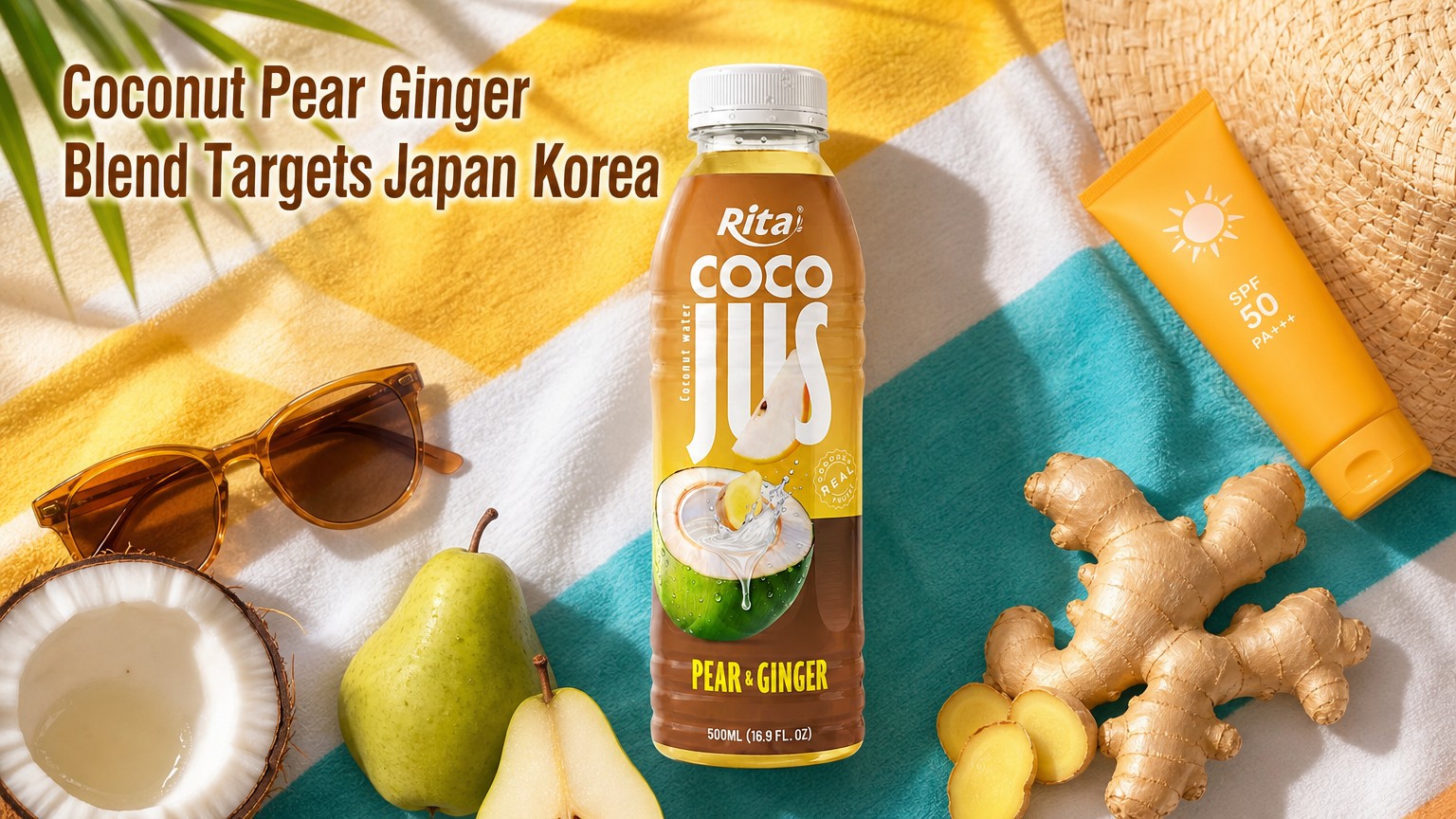
The global ready-to-drink beverage market continues to evolve as consumers seek familiar flavors paired with unexpected twists. One product capturing attention across Asia is the COCO JUS coconut water with pear and ginger blend, a 500ml PET-bottled beverage manufactured by Vietnam-based RITA Food and Drink Co., Ltd. The drink reflects a broader industry movement toward multi-flavor coconut water formulations that combine natural fruit notes with warming spice elements. As importers in Japan and South Korea evaluate their 2025 and 2026 portfolios, the intersection of coconut water with pear and ginger presents a commercially grounded opportunity built on authentic ingredients, export-ready packaging and internationally recognized certifications.
Key Takeaways
- The COCO JUS Real Coconut Water with Pear and Ginger Juice uses real coconut water as its base, paired with real pear juice and a subtle ginger note.
- The 500ml PET bottle format and 18-month shelf life suit retail and foodservice distribution across Japan and South Korea.
- RITA Food and Drink Co., Ltd operates more than 50 automated production lines and exports to over 200 countries and territories.
- The coconut water blend category continues to gain traction among consumers seeking flavor-forward ready-to-drink beverages in Asia-Pacific markets.
- ISO, HACCP, Halal Jakim, FSSC 22000, GMP and BRC certifications support compliance with import requirements in major Asian markets.
Why Coconut Water With Pear and Ginger Appeals to Modern Consumers
Flavor innovation remains one of the most visible indicators of where the beverage industry is heading, and the COCO JUS coconut water blend illustrates this shift with clarity. The drink pairs naturally occurring coconut water with the gentle sweetness of pear juice and a measured ginger kick, creating a profile that reads as crisp, layered and approachable across consumption occasions.
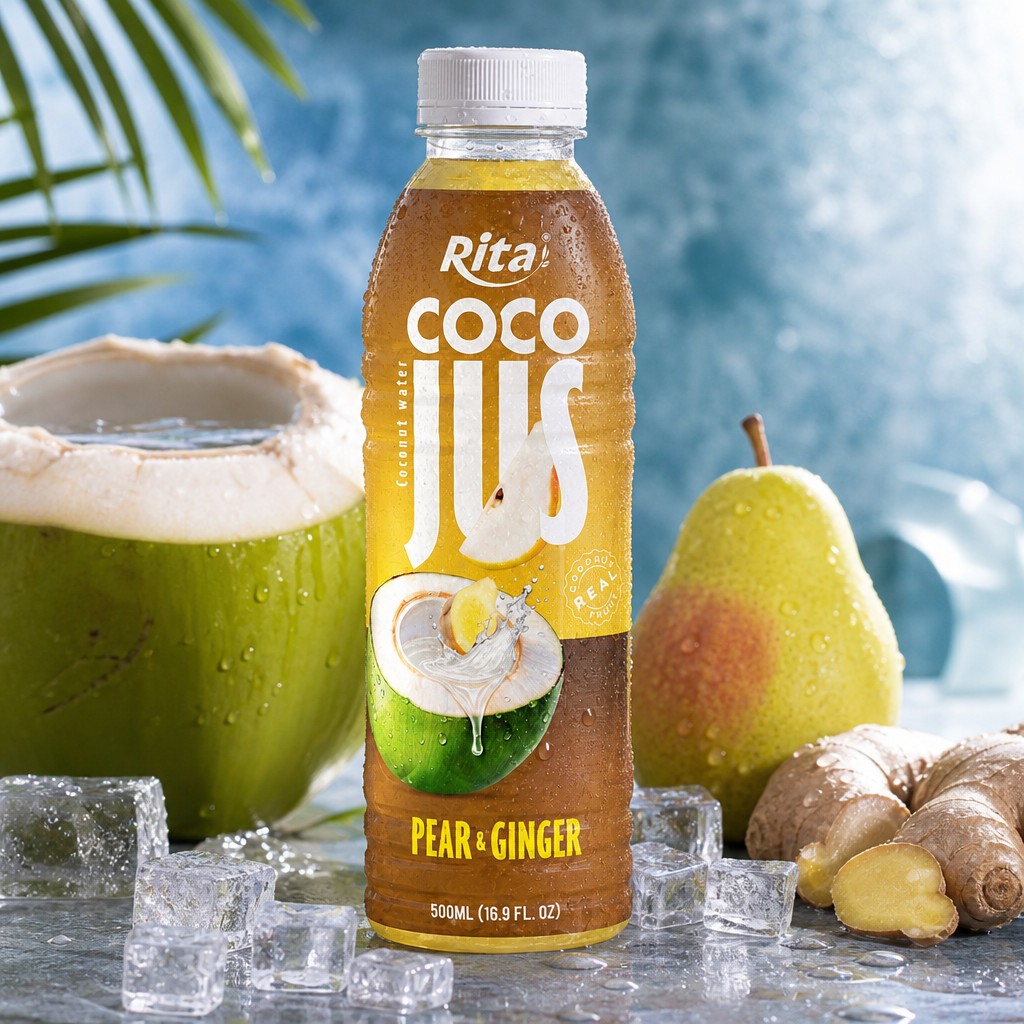
The combination reflects a deliberate strategy rather than a random pairing. Beverage brands have increasingly moved beyond single-fruit coconut water offerings toward blends that add aromatic and textural complexity. Ginger has emerged as a popular modifier across multiple categories, from carbonated drinks to tea-based beverages, because its warming character contrasts well with the clean, mildly sweet taste of coconut water. Pear, with its soft and rounded sweetness, bridges these two elements without overwhelming either one.
What distinguishes this formulation from many competitors on the market is the use of real ingredients rather than flavoring compounds alone. The liquid appears clear with a subtle golden hue, a visual cue that signals authenticity to ingredient-conscious consumers across Asian retail environments. In Japan and South Korea, where packaging aesthetics and ingredient transparency carry significant weight in purchasing decisions, this attention to detail can be decisive at the point of sale.
The Role of Ginger in Emerging Coconut Water Blends
Ginger's role in this blend deserves closer attention. Across the global beverage sector, ginger has moved from a niche ingredient to a mainstream flavor modifier, appearing in everything from sparkling waters to confectionery products. In the context of coconut water, ginger adds a warming counterpoint that extends the sensory arc of the drink. The first sip delivers the clean, mineral-like character of coconut water, followed by the soft sweetness of pear, and finishing with a gentle ginger warmth that lingers without becoming sharp or overwhelming.
This layered profile makes the drink suitable for multiple consumption contexts. In South Korea, ginger has a long association with traditional beverages, which creates a natural cultural bridge for consumers encountering ginger-flavored coconut water for the first time. In Japan, where the ready-to-drink tea and flavored beverage categories have long embraced ginger as a flavor component, the blend sits comfortably within established taste expectations while still feeling contemporary and new.
The practical implication for distributors is straightforward: products that manage to be both familiar and novel tend to achieve faster sell-through in retail environments. The COCO JUS blend positions itself exactly in that sweet spot, making it a relevant addition to shelves in both Japan and South Korea.
Coconut Water Demand in Japan and South Korea
Both Japan and South Korea represent mature but actively evolving beverage markets where coconut water products have steadily gained shelf space over the past decade. The ready-to-drink segment in both countries rewards innovation that respects local taste preferences, and coconut water blends occupy a natural middle ground between everyday refreshment and indulgent flavor experiences.
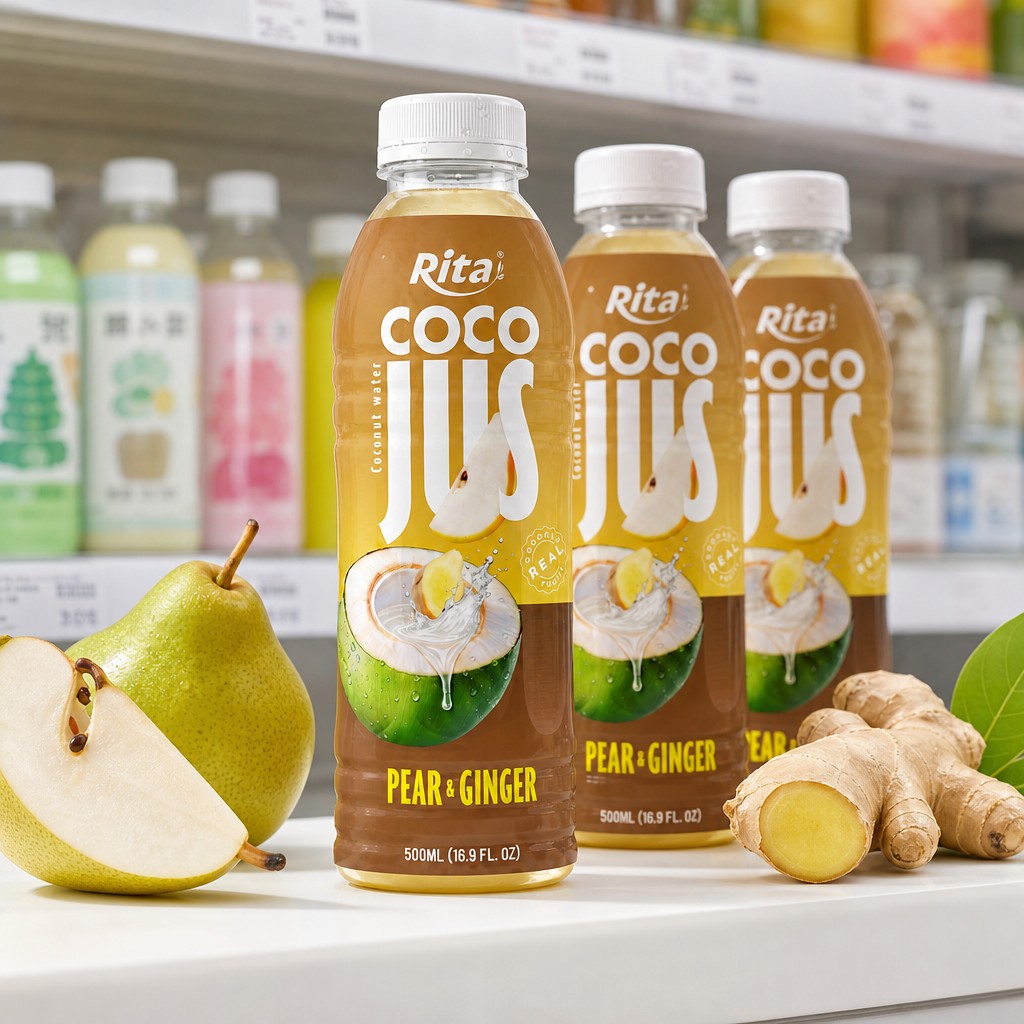
In Japan, the convenience store channel remains the primary distribution point for ready-to-drink beverages, and buyers have placed increasing emphasis on unique flavor profiles and premium packaging in recent years. The 500ml PET format of the COCO JUS product aligns well with Japanese convenience store merchandising standards, where single-serve and moderate-volume bottles dominate the coconut water category. Retailers have also shown growing interest in products that tell a clear origin story, which works in favor of brands that can document their raw material sourcing.
South Korea's market follows a parallel trajectory. Consumers in Seoul, Busan, Incheon and other major metropolitan areas gravitate toward beverages that balance novelty with familiarity. The ginger element resonates with Korean consumers' long-standing appreciation for ginger-infused drinks, while pear keeps the overall flavor profile accessible to a broad demographic. As Korea's convenience store and hypermarket channels continue to expand their tropical beverage offerings, products with multi-flavor profiles and clean packaging are well-positioned to capture shelf space.
The broader industry backdrop reinforces these regional dynamics. Recent developments across the global beverage sector—including new leadership appointments at major coffee companies and the launch of concentrated cold coffee formats—signal that large players are investing heavily in flavor innovation and new consumption occasions. Meanwhile, industry analysts have identified better-for-you beverage segments as areas of strong growth potential. For coconut water brands, the message is consistent: consumers are seeking beverages that deliver more than simple refreshment. They want flavor experiences that feel contemporary, well-crafted and aligned with their everyday routines.
| Market Factor | Japan | South Korea |
|---|---|---|
| Primary retail channel | Convenience stores, supermarkets | Convenience stores, hypermarkets, online |
| Dominant bottle format | 500ml PET, 350ml PET | 500ml PET, 250ml cans |
| Ginger flavor acceptance | High, established in flavored drinks | High, rooted in traditional beverages |
| Coconut water category growth | Steady, premium positioning | Expanding, flavor-led positioning |
| Ingredient transparency priority | Very high | High |
| Shelf life expectation (RTD) | 12–24 months | 12–24 months |
Source: Industry distribution data compiled by ritadrinks.com
From Coconut Orchards to Finished Bottles: RITA's Raw Material Story
The foundation of any credible coconut water beverage begins in the orchard. Vietnam's Mekong Delta region has long been recognized as one of the world's premier coconut growing areas, and the quality of the raw material directly shapes the final product's flavor and consistency.
RITA maintains close working relationships with coconut growers in Ben Tre, a province widely regarded as Vietnam's coconut capital. The company's sourcing approach emphasizes consistency, traceability and quality control at every stage from harvest through processing. In a Ben Tre coconut farm report, RITA documents the journey from plantation to finished product, outlining the agricultural practices that produce the coconut water used across its beverage range.
The broader Mekong Delta landscape offers additional context for understanding why this region plays such an important role in RITA's supply chain. In a Mekong Delta raw materials overview, the company describes the climatic and soil conditions that make the delta an ideal source for tropical fruit ingredients, including coconut, mango, pineapple and banana. These conditions support year-round production and consistent raw material quality.
https://www.youtube.com/watch?v=I7hlTL3FT_0
Why Raw Material Traceability Matters for Importers
For importers in Japan and South Korea evaluating new suppliers, the ability to trace a product's raw material origin back to specific growing regions is increasingly important. Retail buyers and private label partners want assurance that the coconut water in their branded products comes from a reliable, well-documented source. A transparent supply chain also simplifies compliance documentation, which matters in markets where food safety documentation is scrutinized during the import approval process.
RITA's coconut sourcing documentation covers the full chain from Ben Tre orchards through processing to final bottling. This level of traceability is not unusual among large-scale manufacturers, but it becomes a genuine differentiator when combined with the company's certification portfolio and export track record. Importers who can present complete supply chain documentation to their own regulators face fewer obstacles during market entry.
Packaging Design and Shelf Life Considerations for Export
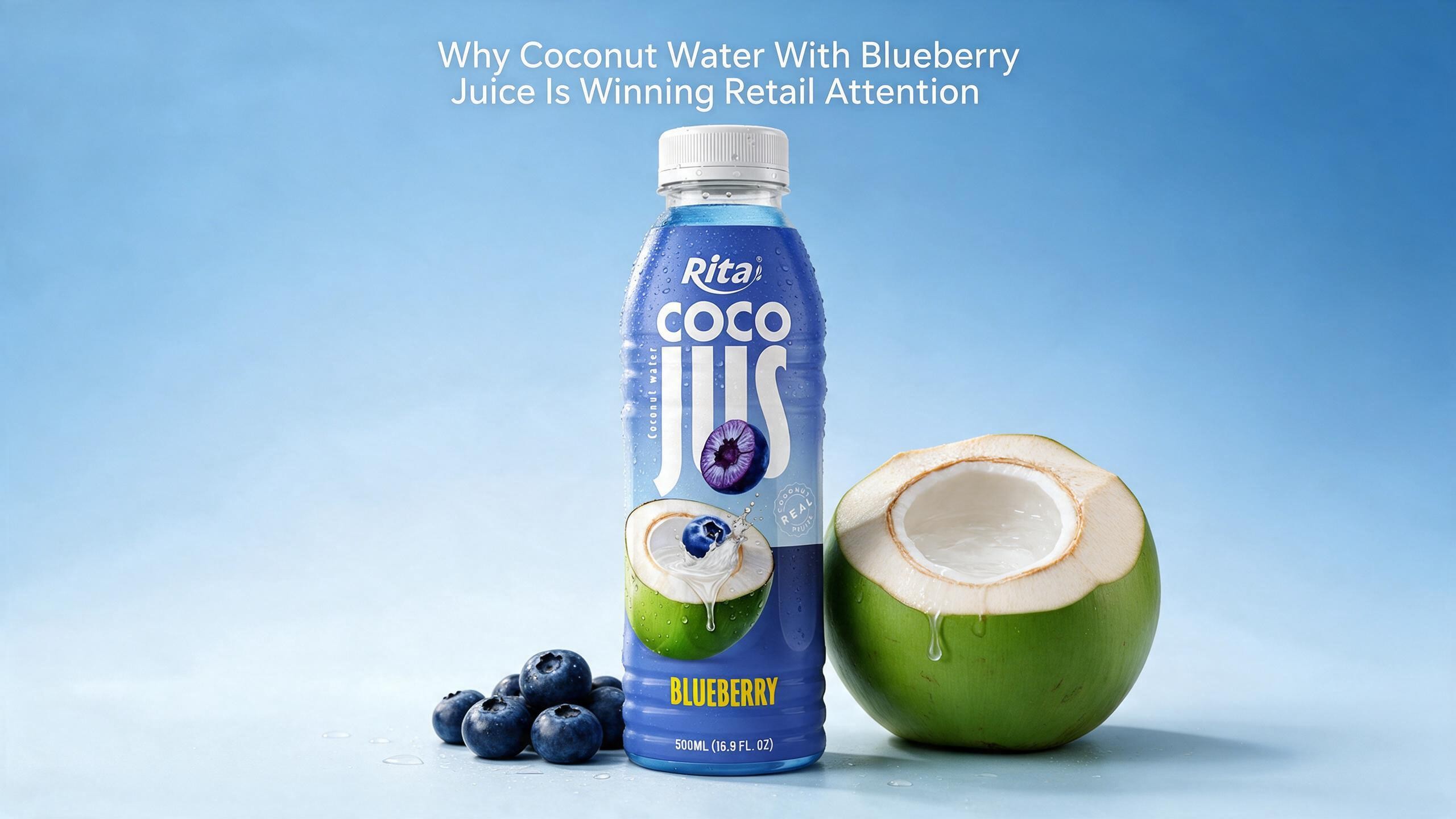
The COCO JUS Real Coconut Water with Pear and Ginger Juice 500ml (16.9 fl oz) is packaged in a PET bottle that balances portability with retail shelf appeal. The label features vibrant imagery of halved coconuts, pear slices and water splashes against a warm gradient background, communicating the product's natural origins before the consumer even breaks the seal.
PET Bottles and Convenience Store Positioning
PET packaging offers tangible advantages for distribution across Japan and Korea. Compared to glass alternatives, PET bottles are lighter, more resistant to breakage during transit and increasingly aligned with retailer packaging preferences. For a 500ml format sold primarily through convenience stores, these practical considerations directly affect logistics costs and loss rates during distribution.
The resealable cap is another functional design element worth noting. Consumers purchasing coconut water blends during a commute or workday often return to the bottle over several hours, and a secure closure preserves both the drink's flavor and the retailer's presentation standards. This detail may seem minor, but it reflects the kind of product design thinking that distinguishes premium-ready-to-drink beverages from commodity offerings.
Shelf Life and Export Logistics
The 18-month shelf life provides distributors with ample room for inventory management across multiple markets. In Japan, where logistics networks are highly efficient but freshness expectations are among the world's most demanding, this shelf life balances practical distribution needs with consumer confidence. In South Korea, the same duration supports both domestic retail cycles and potential re-export scenarios.
For importers managing stock across multiple warehouse locations, a shelf life of this length reduces the urgency associated with shorter-dated products. It also allows for seasonal promotional planning without the risk of unsold inventory approaching its expiry date. As a practical export consideration, the PET format ships efficiently in standard containers, supporting the cost-effectiveness that importers expect from Asian-manufactured beverages.
- 500ml PET format compatible with convenience store and supermarket display standards across Japan and Korea
- Resealable cap supports on-the-go consumption without loss of freshness or flavor integrity
- 18-month shelf life allows flexible inventory management and promotional planning across multiple markets
- Lightweight PET packaging reduces freight costs compared to glass alternatives in international shipping
- Label design communicates product freshness and natural ingredient sourcing at the point of sale
RITA's Manufacturing Scale and Private Label Capabilities
Behind the COCO JUS product stands a manufacturer with significant operational depth and global reach. RITA Food and Drink Co., Ltd, established in 2004, has grown into one of Vietnam's leading OEM and ODM beverage manufacturers, supplying brands across more than 200 countries and territories. The company operates over 50 automated production lines and exports approximately 1,200 containers monthly, a scale that supports both established private label programs and new brand launches.
Certification Coverage and Import Compliance
Quality assurance is embedded in every stage of RITA's production process. The company's facilities operate under a comprehensive certification framework that includes BRC, FSSC 22000, ISO 22000, HACCP, GMP, Halal Jakim, Halal HCA-GCC and Kosher. These certifications represent the rigorous documentation, traceability and hygiene standards that importers in Japan and Korea require when approving new supplier relationships. The company's SMETA audit further reinforces its commitment to responsible business practices throughout its supply chain.
For buyers exploring private label opportunities, RITA's capabilities extend beyond manufacturing. The company provides full OEM and ODM services, from formulation development through packaging design, enabling partners to bring branded coconut water beverages to market without the capital expenditure typically associated with in-house production. This model is particularly relevant in Asia's competitive beverage landscape, where speed-to-market often determines which brands capture consumer attention before competitors respond.
Beyond the coconut water line, RITA's product portfolio includes tropical fruit juices, functional drinks, energy drinks, tea beverages, aloe vera drinks and milk-based beverages, all manufactured in aluminum cans, glass bottles, PET and PP containers. This range allows retail and foodservice partners to develop multi-category procurement relationships with a single qualified supplier, reducing administrative complexity and strengthening long-term negotiating positions.
Supply capability and flexibility are equally important considerations. With a minimum order quantity described as flexible and a supply ability of up to 600 twenty-foot containers per month, RITA can accommodate both large-volume importers testing new markets and smaller operators building initial distributions. Delivery timelines of 20 to 25 days after order confirmation from Ho Chi Minh Port provide a predictable schedule that logistics planners in both Japan and Korea can work with effectively.
Looking Ahead: What This Means for Distributors in Japan and Korea
The beverage markets in Japan and Korea are dynamic, and consumer preferences within them shift continuously. Regulatory requirements evolve, distribution channels adapt to new retail formats, and the competitive landscape restructures as new brands enter and established ones reposition themselves. For importers and distributors, the critical question is not whether coconut water products will remain relevant—the category has proven its staying power—but rather which formulations and supplier partnerships will deliver the most commercial value.
Products like the COCO JUS coconut water with pear and ginger blend represent a convergence of several forces shaping the beverage industry. Real ingredients are increasingly non-negotiable for discerning consumers across both markets. Multi-flavor blends offer differentiation on crowded shelves. Asian flavor profiles continue to exert influence on global beverage trends. And certified, export-ready supply chains reduce the compliance burden on importers navigating complex regulatory environments.
For distributors seeking to differentiate their portfolios in the ready-to-drink category, this combination offers a clear path forward—one that balances consumer appeal with operational practicality and positions suppliers and their partners for sustained growth in two of Asia's most important beverage markets.
Frequently Asked Questions
Q: What is COCO JUS Real Coconut Water with Pear and Ginger Juice?
It is a 500ml PET-bottled beverage made with real coconut water, real pear juice and a hint of ginger, manufactured by RITA Food and Drink Co., Ltd. The product embodies the brand's commitment to authentic ingredients and is available in both branded and OEM/ODM formats for global distribution.
Q: Which certifications does RITA hold for this product?
RITA's production facilities operate under ISO 22000, HACCP, GMP, FSSC 22000, BRC, Halal Jakim, Halal HCA-GCC and Kosher certifications. The specific certifications applicable to each product may vary, and the company provides detailed documentation upon request for import compliance purposes.
Q: What is the shelf life and minimum order quantity for COCO JUS?
The product has an 18-month shelf life and ships in 500ml PET bottles. RITA offers flexible minimum order quantities and maintains a supply ability of up to 600 twenty-foot containers per month, with delivery times of 20 to 25 days from Ho Chi Minh Port, Vietnam.
Q: Does RITA offer private label or OEM services for coconut water beverages?
Yes. RITA provides full OEM and ODM beverage manufacturing services, including formulation development, packaging design and private label production. The company serves brands in over 200 countries and territories and has operated as a beverage manufacturer since 2004, with a portfolio spanning fruit juices, coconut products, functional drinks and more.