

Protein Water Regulations in East Asia: How Certified Manufacturing Meets Market Demands
TABLE OF CONTENTS

The functional beverage sector in East Asia is experiencing a paradigm shift, with protein water emerging as a leading category in Japan and Korea. However, navigating the complex regulatory frameworks in these markets demands more than just a great-tasting product—it requires rigorous certification and transparent manufacturing processes. As consumers in Tokyo, Seoul, Osaka, and Busan increasingly seek convenient protein sources, beverage manufacturers must align with stringent food safety and labeling standards to gain import approval and consumer trust.
Key Takeaways
- Japan and Korea enforce strict regulatory frameworks for functional beverages, including protein water, requiring certifications like BRC and FSSC 22000.
- RITA's 15g Protein Water with Blueberry exemplifies how certified manufacturing facilitates market entry into East Asia.
- OEM/ODM partnerships with certified producers reduce compliance risks and accelerate time-to-market for brands.
- Labeling regulations in Japan (Food Labeling Act) and Korea (Functional Food Code) mandate clear ingredient declarations and nutritional claims.
- Third-party certifications such as Halal, Kosher, and GMP further expand market access for protein water products.
Regulatory Landscape for Functional Beverages in Japan and Korea
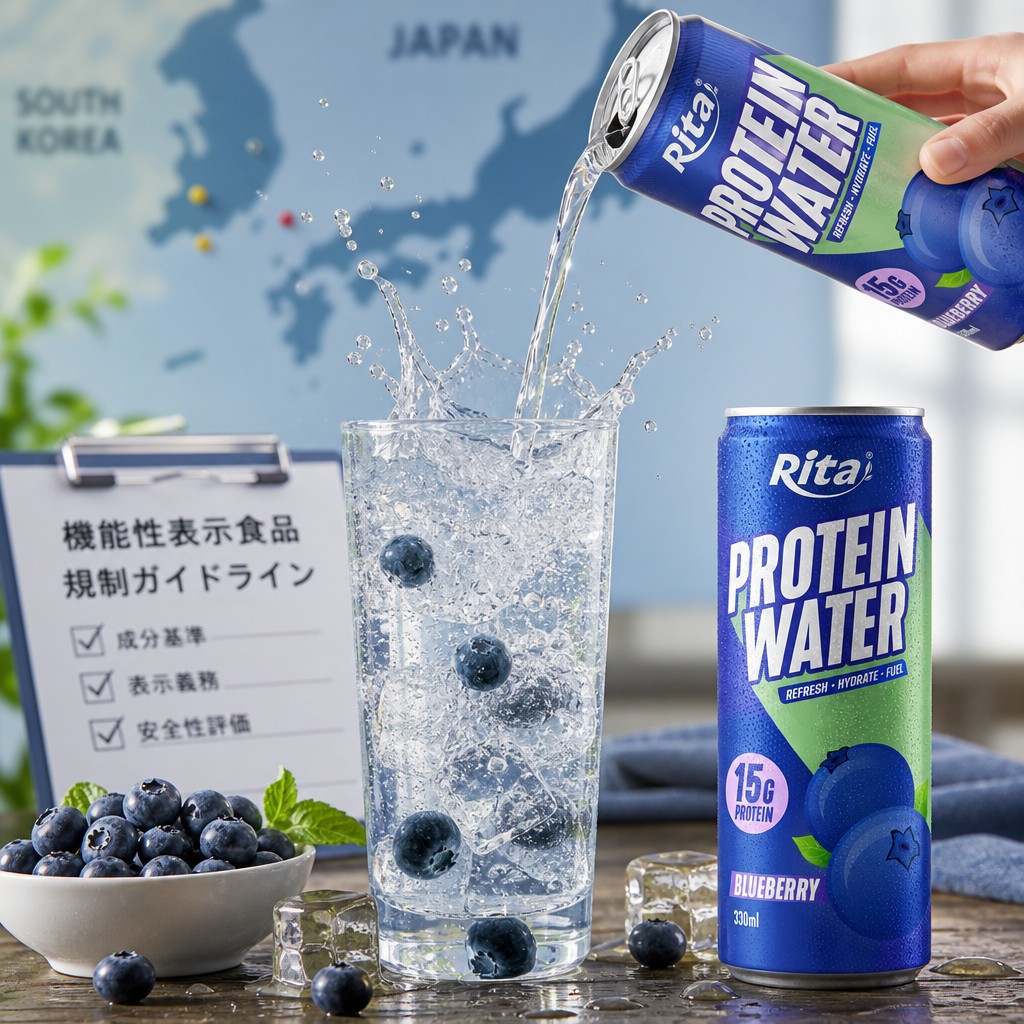
Both Japan and Korea have established comprehensive regulatory systems that govern the import and sale of functional beverages. In Japan, the Food Labeling Act (FLA) and the Health Promotion Act require that any product making nutritional or functional claims must adhere to strict guidelines. Protein water, being a food with added nutrients, falls under the category of "Foods with Function Claims" (FFC) or "Foods for Specified Health Uses" (FOSHU), depending on the claim. This regulatory structure demands that manufacturers provide scientific evidence and meet specific quality standards.
In Korea, the Ministry of Food and Drug Safety (MFDS) enforces the Functional Food Code, which classifies protein water as a health functional food if it contains a certain amount of protein per serving. Importers must submit documentation proving that the product meets Korean standards, including heavy metal limits, microbiological safety, and labeling accuracy. The complexity of these regulations makes it essential for exporters to partner with manufacturers who already hold internationally recognized certifications.
Japan's Food Labeling System and Protein Water
Japan's FLA requires that all ingredients, including added protein sources like pea protein, be listed in descending order of weight. Additionally, any allergen information must be clearly displayed. For protein water, the can must specify the protein content per 100 ml, as well as the total energy and sugar content. These requirements are non-negotiable for any product entering the Japanese market, and failure to comply can result in rejection at customs or costly relabeling.
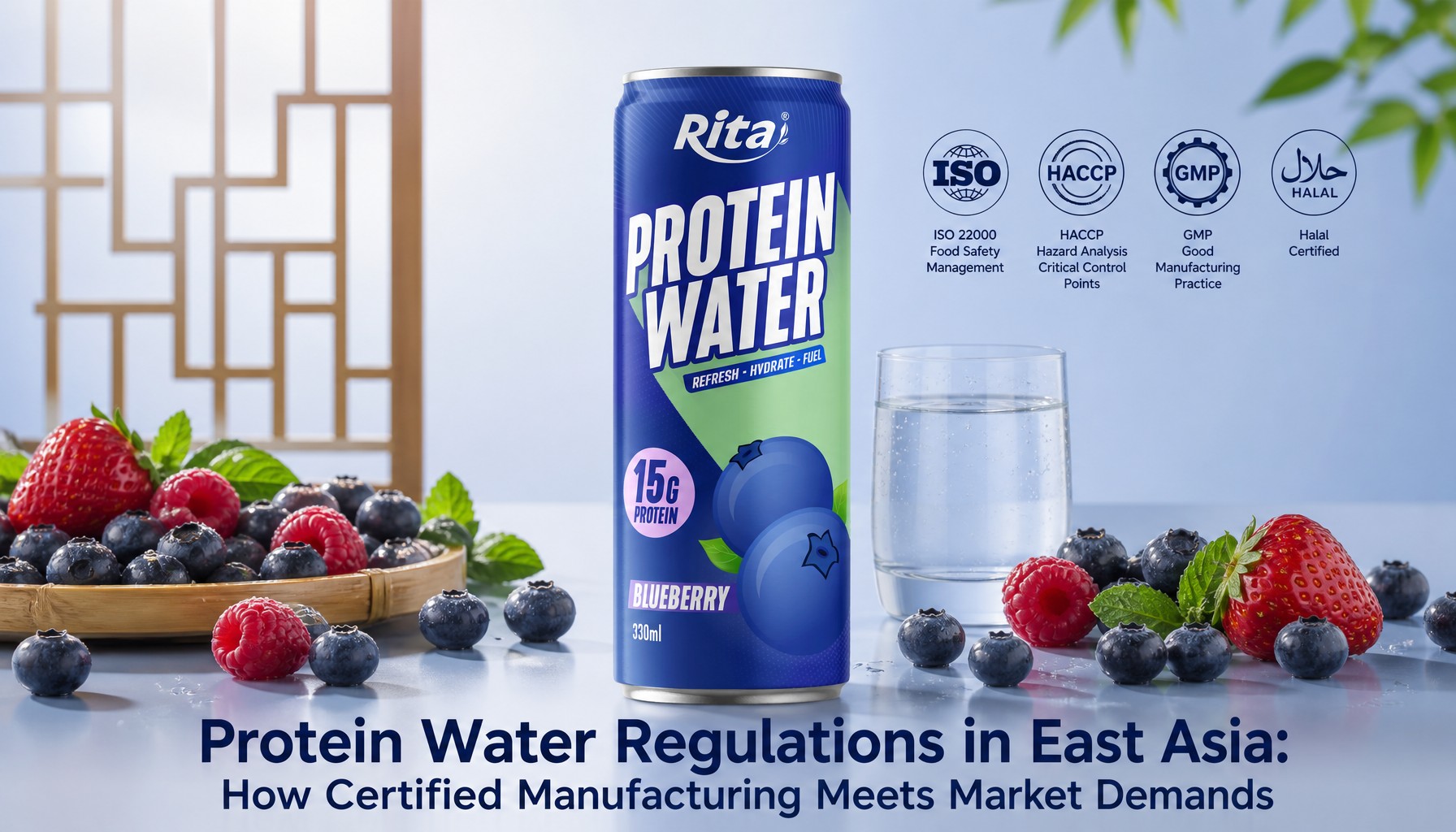
RITA's 15g Protein Water with Blueberry is designed with these regulations in mind. The 330 ml aluminum can features a clean label that clearly states the protein content (15g per can), the ingredients (water, pea protein, natural blueberry flavor), and the absence of artificial additives. This transparency aligns with Japanese consumer expectations for functional beverages that are both effective and safe.
Korea's Functional Beverage Standards
Korea's MFDS requires that any beverage claiming to be a "protein beverage" must contain at least 5g of protein per serving for a basic claim, and higher levels for more specific claims. The product must also undergo a safety assessment if it is considered a new functional food. Korean importers often look for products that are already certified by global bodies such as BRC or FSSC 22000, as these certifications serve as a proxy for local compliance. RITA's protein water with blueberry carries these certifications, making it a strong candidate for the Korean market.
How Certifications Facilitate Market Access
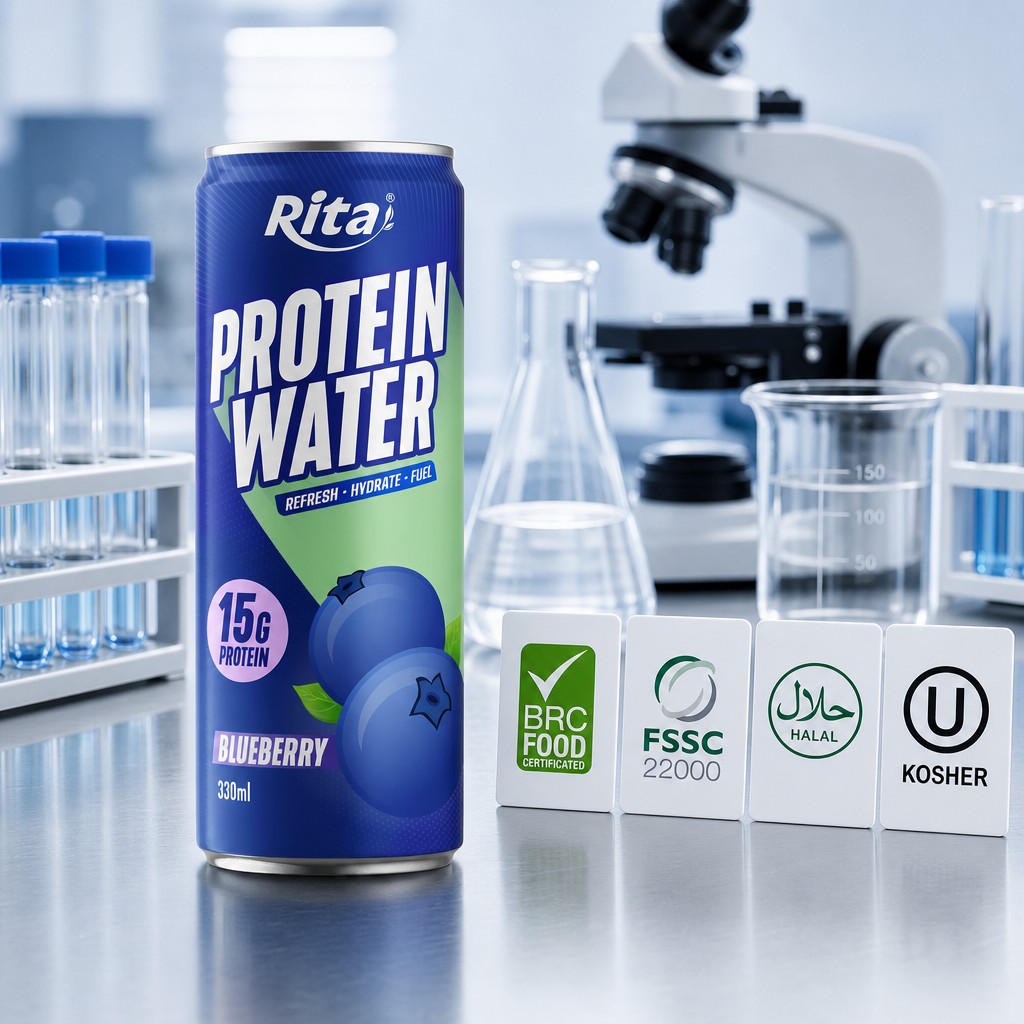
Third-party certifications are the bedrock of regulatory compliance for functional beverages entering East Asia. They provide independent verification that manufacturing processes meet international food safety standards, which is often a prerequisite for import approval in Japan and Korea. RITA Food and Drink Co., Ltd., with its full suite of certifications including BRC, FSSC 22000, Halal, Kosher, ISO, GMP, and HACCP, offers a ready-made solution for brands seeking to penetrate these markets.
BRC and FSSC 22000: Global Benchmarks
The BRC Global Standard for Food Safety is recognized by the Global Food Safety Initiative (GFSI) and is widely accepted by Japanese retailers and Korean importers. FSSC 22000, another GFSI benchmarked scheme, focuses on food safety management systems. Both certifications require regular audits of the production facility, ingredient traceability, and rigorous sanitation procedures. For a product like 15g Protein RITA Protein Water with Blueberry, these certifications assure buyers that the product is manufactured under the highest standards of hygiene and quality control.
Halal and Kosher for Diverse Consumer Bases
In addition to conventional certifications, Halal and Kosher certifications open doors to specific consumer segments in Japan and Korea. While these countries are not majority Muslim or Jewish, the growing tourism and expatriate communities create demand for certified products. RITA's Halal Jakim and Kosher certifications ensure that its protein water can be marketed to these groups without additional qualification. This is a key differentiator for brands looking to expand their reach in urban centers like Seoul and Osaka.
The Role of OEM/ODM in Regulatory Compliance
For many international brands, the most efficient path to the Japanese and Korean markets is through an OEM/ODM partnership with a certified manufacturer. RITA's OEM service allows brands to leverage existing production lines that already meet stringent regulatory requirements, reducing the time and cost of achieving compliance. The company's energy drinks series and other functional beverages demonstrate its capability to produce high-protein, low-sugar formulations that meet local taste preferences.
Custom Formulations for Local Palates
While regulatory compliance is critical, product acceptance also depends on flavor and texture. Japanese consumers often prefer lighter, less sweet beverages, whereas Korean consumers may favor more pronounced fruit flavors. RITA's protein water with blueberry strikes a balance with a natural blueberry taste that appeals to both markets. The use of pea protein ensures a smooth mouthfeel without the chalkiness sometimes associated with protein powders, a key factor in consumer acceptance.
Quality Assurance from Farm to Can
RITA's manufacturing processes are backed by ISO 22000 and GMP certifications, ensuring that every batch of protein water meets consistent quality standards. The company's supply chain—from raw material sourcing to canning—is regularly audited to maintain these certifications. This end-to-end quality assurance is especially important for protein water, where the stability of protein content and the absence of contaminants are paramount.
Case Study: RITA's 15g Protein Water with Blueberry
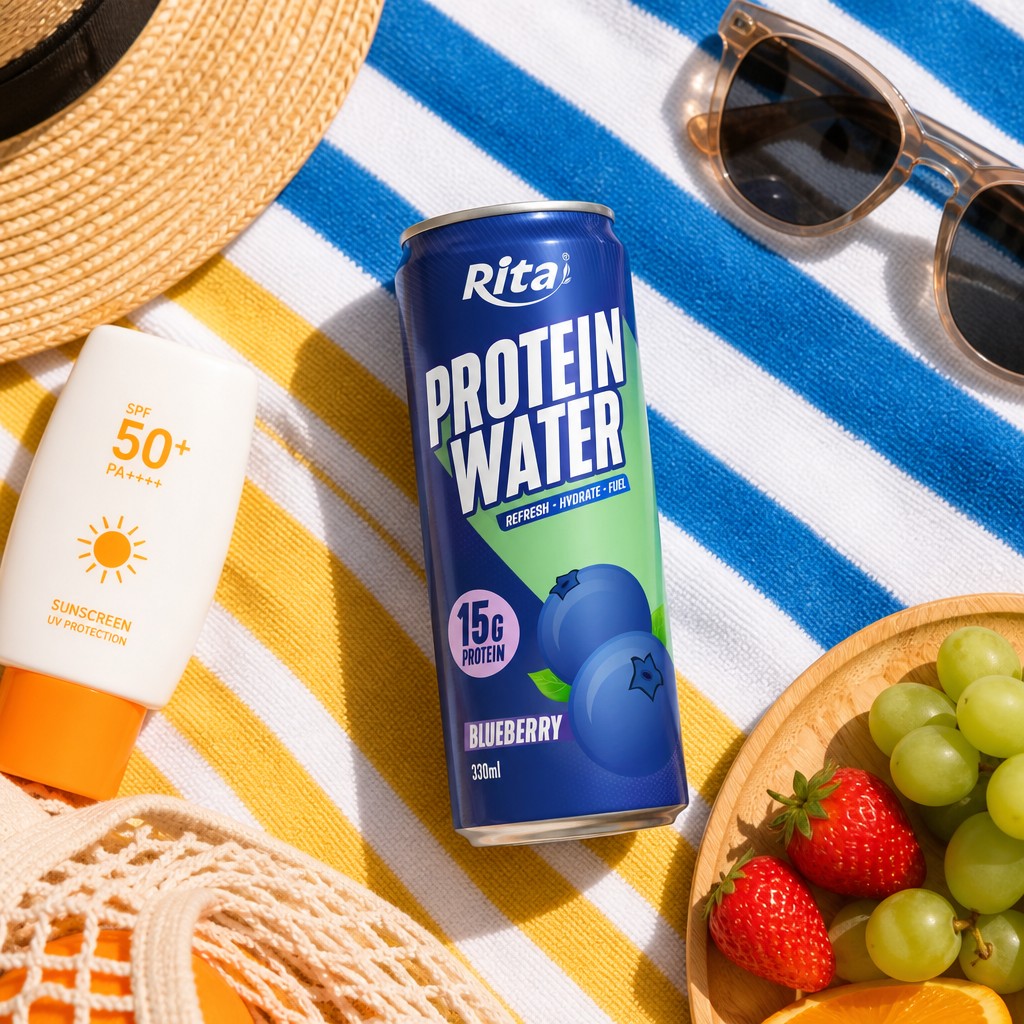
RITA's 15g Protein Water with Blueberry serves as a textbook example of how a certified product can navigate the regulatory maze of East Asia. Produced in a BRC and FSSC 22000 certified facility, each 330 ml aluminum can is filled with a precisely formulated blend of water, pea protein, and natural blueberry flavor. The product's packaging—designed with a deep blue gradient and green accents—clearly communicates the 15g protein content, the "REFRESH • HYDRATE • FUEL" tagline, and the RITA brand logo.
The product is available for OEM/ODM partnerships, allowing brands to market it under their own label while relying on RITA's existing certifications. This significantly reduces the regulatory burden for new entrants to the Japanese and Korean markets. By choosing RITA's protein water with blueberry as a base, brands can focus on branding and distribution, knowing that the product meets all necessary safety and labeling standards.
Furthermore, RITA's flexibility in MOQ (minimum order quantity) and its ability to produce large volumes (up to 600 twenty-foot containers per month) make it an ideal partner for both small startups and large multinationals. The company's export experience to over 200 countries provides invaluable insights into the regulatory nuances of individual markets.
Frequently Asked Questions
1. What certifications does RITA's protein water have for export to Japan and Korea?
RITA's protein water is produced under BRC, FSSC 22000, Halal, Kosher, ISO, GMP, and HACCP certifications, which are widely accepted by Japanese and Korean import authorities.
2. How does the protein water meet Japanese labeling requirements?
The product label clearly lists all ingredients, protein content per 100ml, allergen information, and complies with the Food Labeling Act of Japan.
3. Can I import this protein water under my own brand?
Yes, RITA offers OEM/ODM services, allowing you to brand the product as your own while leveraging RITA's existing certifications.
4. What is the minimum order quantity for private labeling?
RITA offers flexible MOQ to accommodate different business scales, from small test batches to large container volumes.
5. Does the product contain any artificial sweeteners or flavors?
No, the protein water uses natural blueberry flavor and is sweetened with natural ingredients, aligning with clean label trends in Japan and Korea.