

Prebiotic Soda Trend in Japan and Korea: RITA's Lemon Lime Can
TABLE OF CONTENTS

Across the bustling streets of Tokyo, Osaka, Seoul, and Busan, a new generation of beverage consumers is redefining what it means to enjoy a carbonated drink. No longer satisfied with sugar-heavy sodas or artificially flavored options, these buyers are gravitating toward products that balance taste with modern nutritional preferences. The lemon lime prebiotic soda produced by RITA Food & Drink Co., Ltd. is capturing attention in this space, offering a crisp, zesty experience in a compact 330ml short can that fits seamlessly into fast-paced urban lifestyles.
Key Takeaways
- Prebiotic sodas are emerging as a key growth segment in Japan's and South Korea's beverage markets.
- The 330ml short can format aligns with the region's demand for portion-controlled, portable refreshment.
- RITA's OEM/ODM expertise enables brands to launch customized carbonated drinks quickly and efficiently.
- Rigorous production standards, including BRC and FSSC 22000 certifications, make RITA a reliable manufacturing partner.
- Market data suggests sustained expansion for functional carbonates across Asia-Pacific.
The Functional Beverage Wave in Japan and Korea
The functional drink sector in Asia is growing at an unprecedented pace. According to industry analysts, the region now accounts for nearly half of global functional beverage sales, with carbonated products gaining ground as consumers seek familiar formats with enhanced attributes.

For years, Japan led the charge with innovations in ready-to-drink teas and vitamin-infused waters. Korea followed with its own distinct preferences, emphasizing unique flavor combinations and aesthetically pleasing packaging. Into this dynamic landscape enters the lemon lime prebiotic soda, a beverage that blends the universal appeal of citrus with the growing interest in prebiotic ingredients. It's no surprise that this product has found resonance in cities like Fukuoka, Incheon, and Daegu.
A Shift to Everyday Wellness
Consumers across the region are increasingly mindful of the ingredients they consume. The term "prebiotic" has gained visibility in both food and drink categories, and carbonated sodas are no exception. While energy drinks once dominated the functional space, the focus has shifted to daily wellness products that can be enjoyed without a specific occasion. Drinks like RITA's lemon lime offering satisfy this need, providing the familiar fizz of a soda while aligning with a more considered approach to refreshment.
The Role of Citrus Flavors
Citrus flavors have long been a staple in Asian markets. From yuzu in Japan to citron tea in Korea, the bright and tangy notes of lemon and lime are universally loved. RITA's decision to pair these two classics with a prebiotic formula is a strategic one, appealing to both traditionalists and trend seekers. The result is a beverage that feels familiar yet refreshingly modern. As noted in the company's broader carbonated drink portfolio, such innovation is a hallmark of RITA's product development strategy.
Why Lemon Lime Prebiotic Soda Fits the Trend
Flavor and Format
The 330ml short can is a deliberate choice. Compared to larger cans, it offers a more controlled serving size, which aligns with the portion-conscious mindset of many Asia-Pacific consumers. The compact format also allows for easier stacking and displays in convenience stores, a key retail channel in both Japan and Korea. Moreover, the aluminum can protects the carbonation and flavor integrity, ensuring that every sip delivers the same effervescent quality. This can format is part of a growing preference for soft drink range innovation that travels well.
Retail Appeal and Portability
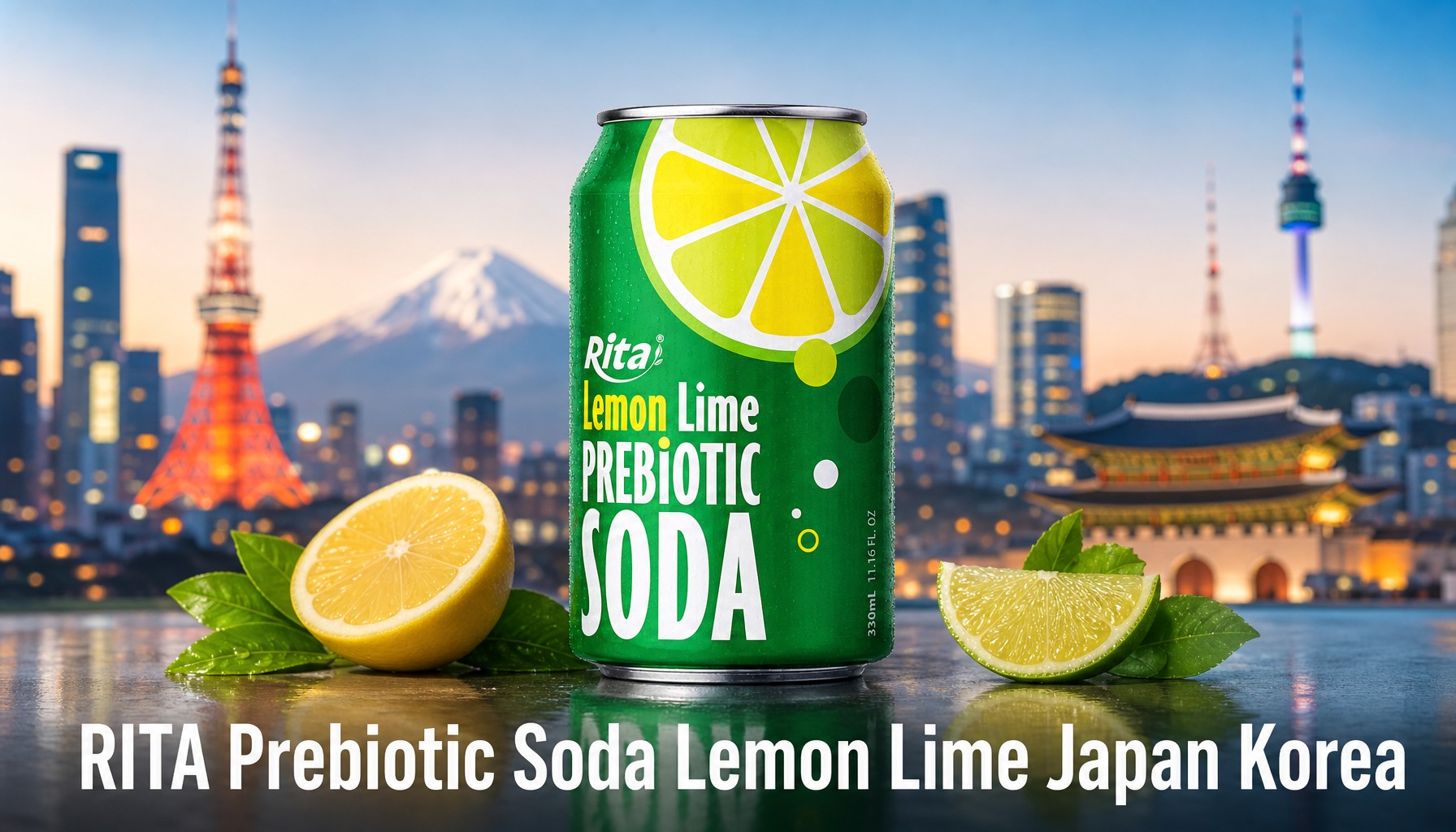
From vending machines in Tokyo to premium grocery shelves in Seoul, the visual presentation of a beverage can influence purchase decisions. The vibrant green and yellow graphics of RITA's Lemon Lime Prebiotic Soda 330ml short can stand out in a sea of neutral-toned packaging. The short can size also fits into bento boxes, office fridges, and travel bags, making it an easy grab-and-go option for busy professionals and students alike.
RITA as a Strategic Manufacturing Partner
Behind this product lies a manufacturing operation built for scale and international standards. RITA Food and Drink Co., Ltd., established in 2004, has grown into one of Vietnam's premier beverage exporters, supplying brands in more than 200 countries and territories. With 50+ automated production lines and monthly exports exceeding 1,200 containers, the company offers a level of capacity that few rivals can match.
For brands looking to enter the prebiotic soda segment, partnering with an experienced OEM/ODM manufacturer is often the most efficient path. RITA's lemon lime prebiotic soda can be customized to meet local taste preferences, whether that means adjusting sweetness levels, modifying carbonation intensity, or redesigning the label. This flexibility is especially valuable in a region where consumer preferences vary significantly between Japan and Korea.

OEM and ODM Capabilities
RITA's OEM service extends beyond simple production. The company supports clients through every stage, from recipe formulation to packaging design. For a product like the lemon lime prebiotic soda, this means brands can source a ready-to-market beverage without investing in their own manufacturing infrastructure. The ODM model goes further, allowing companies to leverage RITA's R&D expertise to develop truly differentiated offerings. This approach has made RITA a trusted partner for distributors and retailers across East Asia.
Certifications That Matter
Quality assurance is non-negotiable in the beverage industry, especially when exporting to mature markets. RITA's facilities hold a comprehensive set of certifications, including BRC, FSSC 22000, Halal (JAKIM and HCA-GCC), Kosher, ISO, GMP, HACCP, and SMETA. These credentials provide confidence to retailers and importers that the production process meets global food safety expectations. For the Japanese and Korean markets, where regulatory standards are stringent, this is a significant advantage.
Market Outlook for Prebiotic Sodas in Asia
Industry projections indicate that the functional carbonate segment is poised for continued growth. As consumers become more ingredient-literate, the demand for beverages with added value—whether prebiotics, probiotics, or adaptogens—shows no signs of slowing.
Market & Export Data — Strawberry Lemon Prebiotic Soda & Related Products
Annual Trend (Aug 2025 – Aug 2026)
| Year | Trade Count | Total Value (USD) | Total Weight (kg) | Total Quantity (units) | YoY Change |
|---|---|---|---|---|---|
| 2025 | 2 | 65 | 75 | 32 | — |
| 2026 | 1 | 241 | 150 | 0 | Count −50%; Value +270%; Weight +101% |
Data source: Tradesparq Trade Data (tradesparq.com)
Top Origin & Destination Countries
| Country | Role | Trade Count | Total Value (USD) | Total Weight (kg) | Total Quantity (units) | Market Share | Avg. Price (as given) |
|---|---|---|---|---|---|---|---|
| United States | Origin | 3 | 306 | 225 | 32 | 100% | — |
| Peru | Destination | 2 | 65 | 75 | 32 | 67% | ~2 USD/unit (flavored water) |
| Philippines | Destination | 1 | 241 | 150 | 0 | 33% | ~1.6 USD/kg (soup products) |
Data source: Tradesparq Trade Data (tradesparq.com)
Between August 2025 and August 2026, trade in Strawberry Lemon Prebiotic Soda and related products fell 50% YoY in transaction count (from 2 to 1), while total value surged 270% YoY to 241 USD and total weight rose 101% YoY to 150 kg. The drop in total quantity to 0 units in 2026 is a data anomaly: that year’s main traded category — soup products under HS 210410 — is measured by weight, not unit quantity. All activity was concentrated in just two months: December 2025 (2 trades, 75 kg, 65 USD, 32 units) and March 2026 (1 trade, 150 kg, 241 USD), with zero trade in all other months, indicating a seasonal or batch-oriented transaction pattern.
The United States is the sole origin market, accounting for 100% of supply (3 trades, 306 USD, 225 kg) — a one-to-two trade pattern with Peru and the Philippines. Peru holds 67% of trade count as the destination of flavored water under HS 220210 (2 small-batch transactions, 65 USD, 32 units, averaging ~2.3 kg/unit and ~2 USD/unit), while the Philippines accounts for 33% of trade count but received the highest-value shipment: one 241 USD bulk soup order (HS 210410) at ~1.6 USD/kg. HS 220210 represents 67% of total trade frequency, whereas soup products under HS 210410 drive 79% of total trade value, and both markets operate through stable, fixed cooperative relationships.
Growing Distribution Channels
In Japan, the convenience store network remains a dominant distribution channel, with frequent new product launches every week. This dynamic environment rewards brands that can bring innovative beverages to market quickly. RITA's flexible manufacturing turnaround times enable clients to respond to these opportunities. Korea's e-commerce and specialty café sectors are equally dynamic, creating multiple entry points for prebiotic sodas. The Lemon Lime Prebiotic Soda 330ml short can is well positioned for these channels, thanks to its distinctive appearance and portable format.
Evolving Consumer Preferences
Taste remains the number one factor driving repeat purchases, but values such as transparency and clean ingredients are becoming increasingly influential. Consumers want to know what is in their can and where it comes from. RITA's commitment to quality and its ability to provide detailed product information help build trust. Whether sourced from a convenience store in Gwangju or a supermarket in Sapporo, a can of this prebiotic soda tells a story of craftsmanship and international quality standards.
Packaging and Product Appeal
The visual identity of the lemon lime prebiotic soda is as refreshing as the drink itself. The can features a bright green background with vivid illustrations of lemon slices and lime segments, creating an immediate association with natural citrus. The short can design, measuring 330ml, is both modern and practical. Its compact height makes it comfortable to hold and easy to store, a detail that may seem minor but significantly impacts the overall user experience.

Furthermore, the use of aluminum ensures that the beverage remains chilled quickly and retains its carbonation for longer periods. This is particularly important for a product designed to imitate the soda experience. For retailers, the can's printing quality and color accuracy are essential, and RITA's production lines deliver consistent results even on large orders. The company's ability to manage complex packaging requirements is one more reason why it has become a preferred partner for the beverage industry in Japan and Korea. A brief comparison of the product's technical specifications illustrates its market readiness:
| Feature | Detail |
|---|---|
| Volume | 330 ml |
| Packaging | Aluminum short can |
| Shelf Life | 24 months |
| Certifications | ISO, HACCP, HALAL, FSSC, GMP, BRC |
| Supply Ability | 600 twenty-foot containers/month |
Frequently Asked Questions
What is the size of the Lemon Lime Prebiotic Soda?
The beverage is packaged in a 330ml aluminum short can.
Can this product be private labeled?
Yes, RITA offers OEM and ODM services to customize the beverage according to your brand requirements.
Which certifications does RITA hold for this product?
The product is produced under ISO, HACCP, HALAL, FSSC, GMP, and BRC certified processes.
How can I order this product for distribution in Japan or Korea?
You can contact RITA through their website to discuss flexible MOQ, pricing, and delivery schedules.
What is the minimum order quantity?
RITA offers a flexible minimum order quantity to accommodate both emerging brands and established distributors.