

Strawberry Lemon Prebiotic Soda: Sustainable Sip for Japan & Korea
TABLE OF CONTENTS

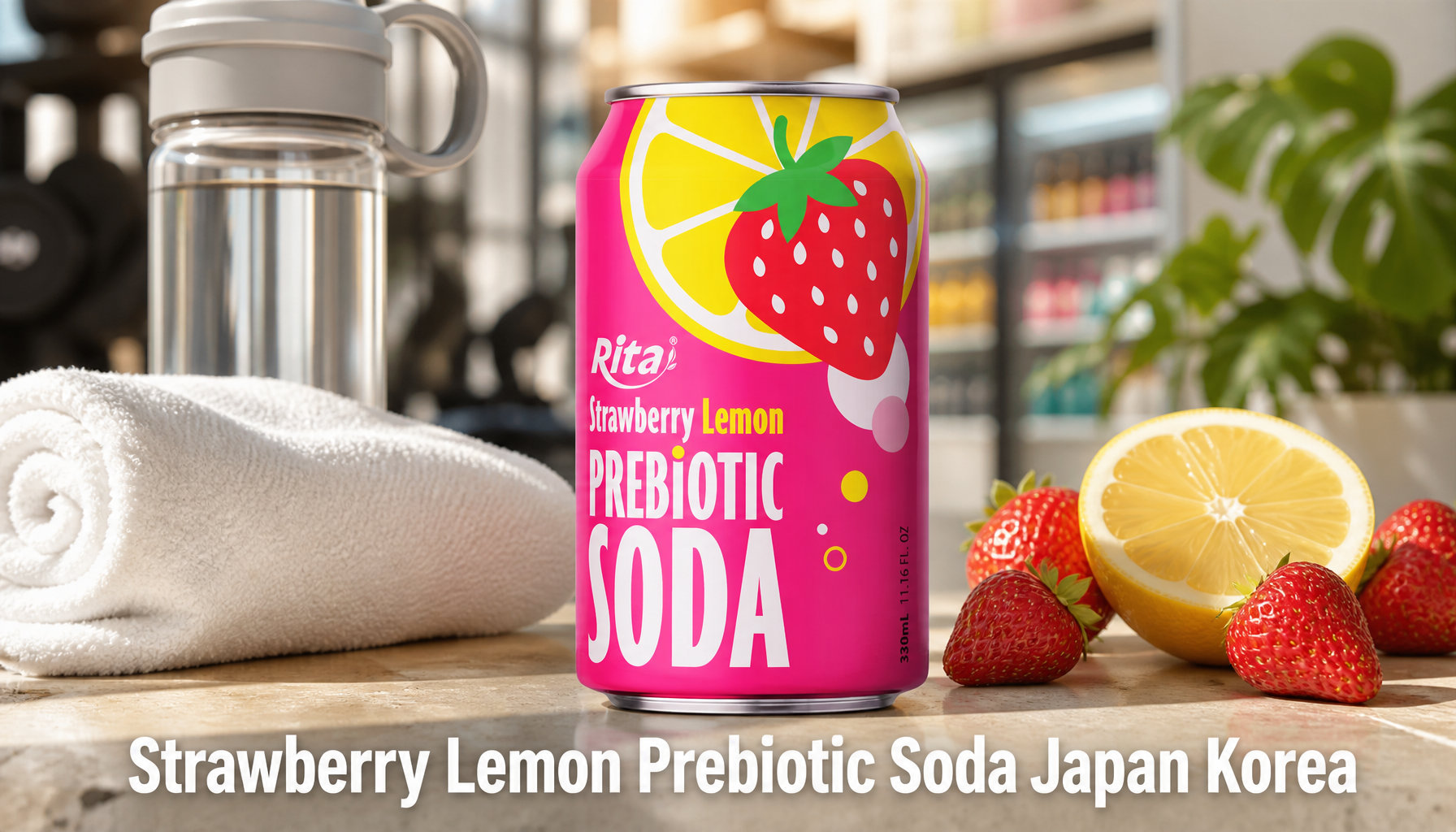
As the beverage industry pivots toward sustainability, carbonated drinks are being reimagined with eco-conscious packaging and cleaner ingredient profiles. The Strawberry Lemon Prebiotic Soda 330ml short can from RITA is a prime example—a vibrant, lightly carbonated refreshment designed to meet the evolving expectations of consumers in Japan and South Korea. This product combines juicy strawberry with zesty lemon, offering a crisp, fruity experience in a compact, recyclable aluminum format.
Key Takeaways
- Prebiotic sodas are gaining traction in Japan and Korea as consumers seek refreshment with added value.
- Sustainable packaging is a decisive factor for modern beverage buyers across the two markets.
- RITA's OEM/ODM capabilities enable brands to launch region-specific sodas with minimal environmental footprint.
- The compact 330ml can format supports convenience while reducing material usage.
- Vietnam's export infrastructure makes RITA a reliable partner for sustainable beverage sourcing.
The Rise of Prebiotic Sodas in Japan and Korea
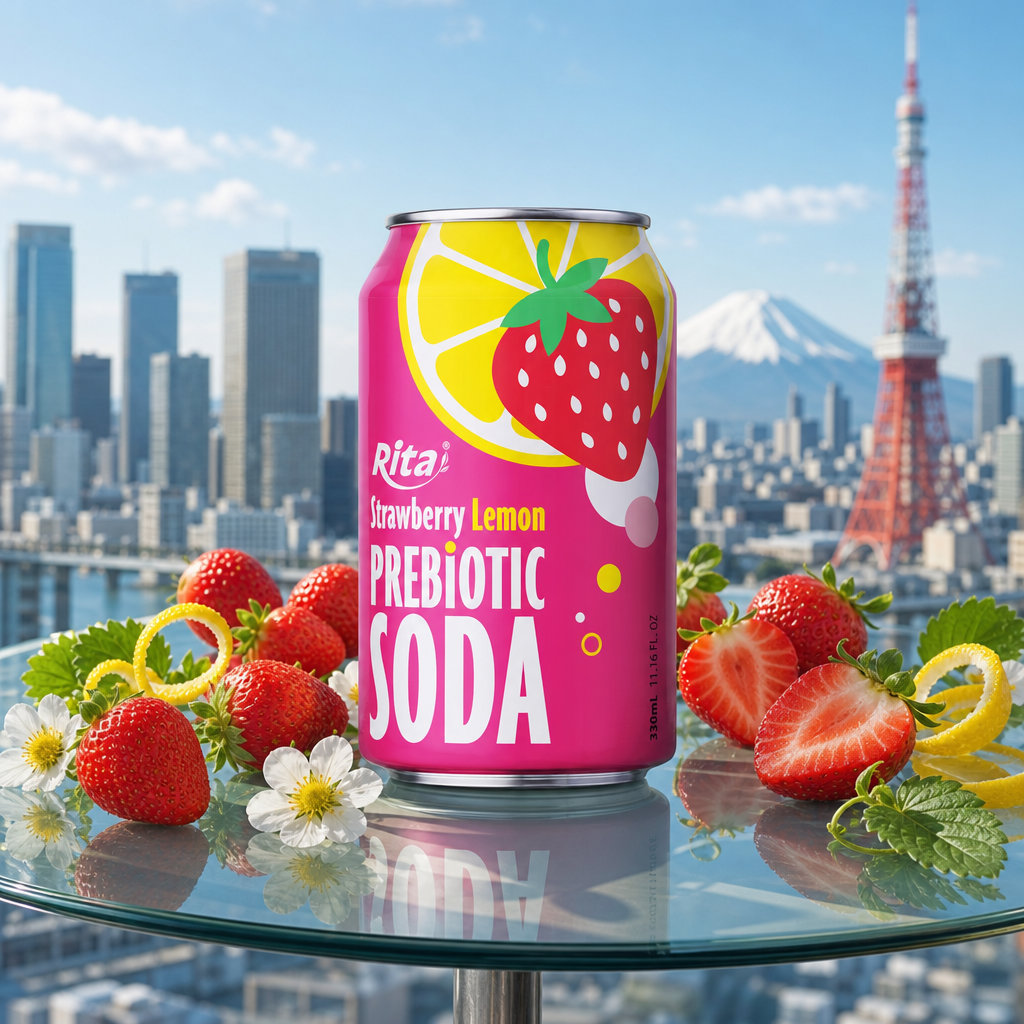
Consumer preferences in Asia's most dynamic beverage markets are shifting. Shoppers in Tokyo, Osaka, Seoul, and Busan increasingly look for drinks that deliver a familiar fizzy pleasure yet carry a modern, responsible story. The prebiotic soda category fits this demand, blending fruit-forward flavors with a fiber-forward nutritional profile that appeals to wellness-oriented demographics.
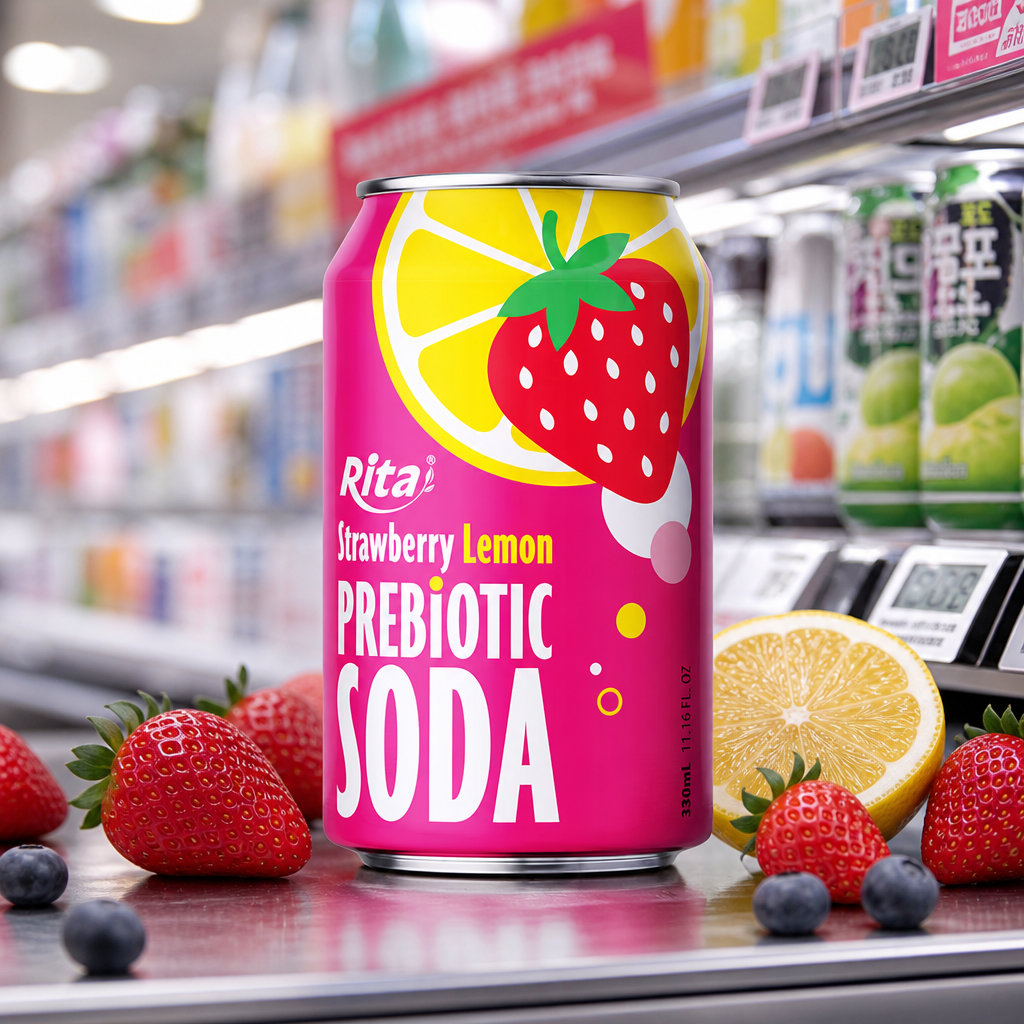
In Japan, convenience stores and vending machines across Honshu, Hokkaido, Kyushu, and Shikoku are stocking lower-sugar carbonates that still deliver bold taste. Korean consumers in Seoul, Busan, Incheon, Daegu, Daejeon, and Gwangju show a parallel enthusiasm for fruit-based sodas with transparent labels. This convergence makes the Strawberry Lemon Prebiotic Soda an attractive addition to retailer listings in both countries.
Shifting Consumer Preferences
Gone are the days when cola dominated the carbonated drink aisle. Today's drinkers prioritize taste, ingredient clarity, and environmental impact. The strawberry lemon flavor profile answers the first two demands, while the aluminum can speaks to sustainability. This combination is a powerful driver of trial and repeat purchase.
Retail analysts note that functional carbonates—those with prebiotic or other added-value positioning—are outpacing standard sodas in growth. The 330ml short can size aligns with single-serve occasions, reducing potential waste and encouraging portion control.
The Role of Sustainability in Beverage Choices
Sustainability is no longer a fringe concern; it is a core purchasing criterion. A 2024 survey found that over 60% of Japanese consumers consider packaging recyclability before buying a beverage. Korean shoppers show similar sentiments, with soft drink purchases increasingly influenced by a brand's environmental footprint.
Aluminum cans are infinitely recyclable, making them a preferred choice for eco-conscious brands. The compact design of the 330ml short can further cuts material usage by up to 15% compared to standard 330ml slims, demonstrating that small format changes can yield measurable sustainability gains.
Strawberry Lemon Prebiotic Soda: A Sustainable Choice
The Strawberry Lemon Prebiotic Soda is not just another fruit-flavored fizz. It is a carefully engineered product that balances taste, texture, and environmental responsibility. The visual identity—a bold pink background, glossy red strawberry, and bright lemon wheel—signals the vibrant flavor inside while standing out on crowded shelves.
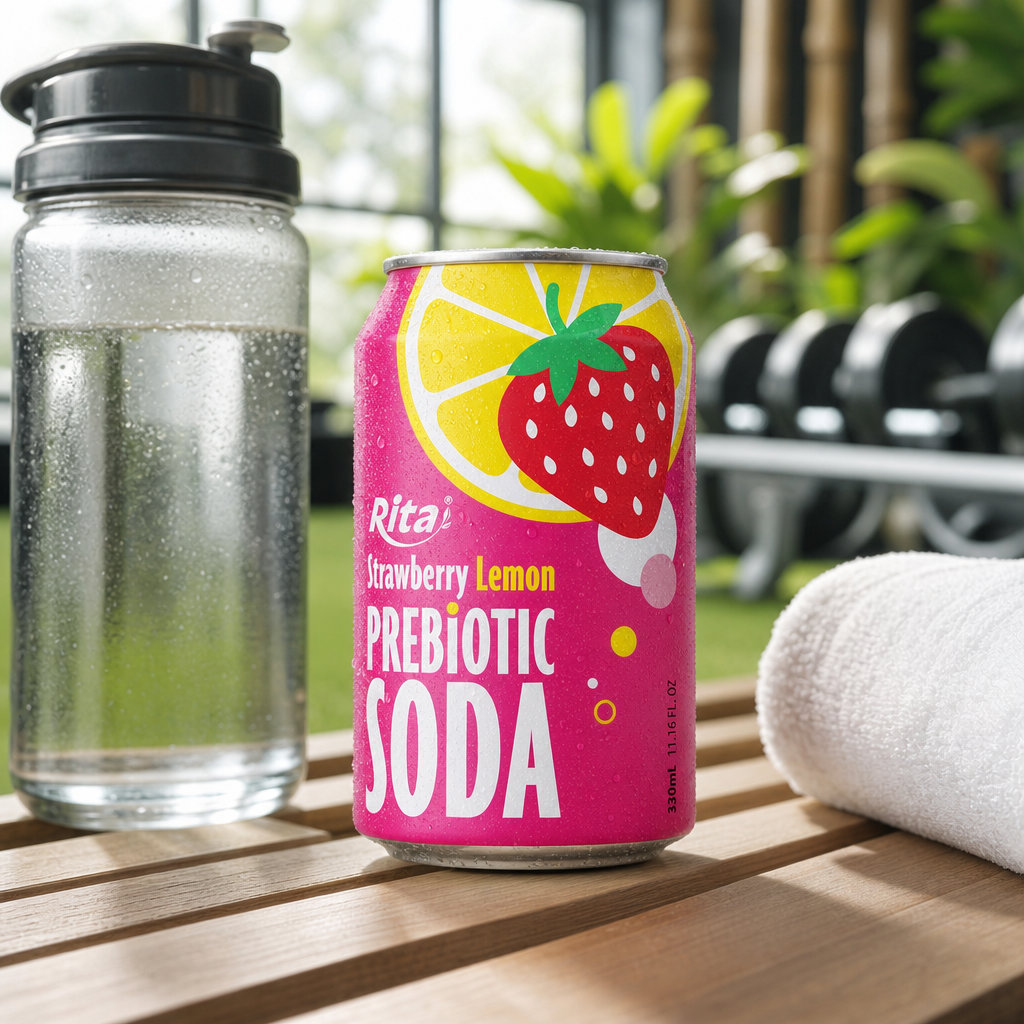
Each can delivers a natural-tasting blend without a heavy syrup mouthfeel. Light carbonation complements the berry-citrus notes, leaving the palate refreshed. This makes the soda suitable for lunch pairing, afternoon pick-me-ups, or social settings—instances that align with the region's busy urban lifestyles.
Packaging That Aligns with Sustainability Goals
The 330ml short can is manufactured with a focus on recyclability. RITA uses food-grade aluminum that can be recycled repeatedly without quality loss. For retailers, this simplifies waste management and reinforces corporate social responsibility narratives. For consumers, the can is lightweight, reducing transportation energy.
Beyond materials, the production process in RITA's Vietnamese facilities follows strict environmental standards. Advanced manufacturing lines optimize energy and water consumption, lowering the carbon footprint per unit. This makes the prebiotic soda in 330ml can a defensible choice for distributors tracking sustainability metrics.
Flavor Profile and Consumer Appeal
Taste remains the ultimate driver of repeat purchases. The strawberry lemon combination is universally appealing, yet it offers a sophisticated sharpness that lifts it above standard fruit sodas. The lemon brightness cuts through the berry sweetness, creating a balanced, more adult-friendly flavor.
The short can format encourages on-the-go consumption, a key occasion in Japanese and Korean cities. Whether purchased from a konbini in Tokyo or a GS25 in Seoul, the can fits neatly into bag compartments and cup holders, making it a practical choice.
RITA's Commitment to Sustainable Manufacturing
RITA Food and Drink Co., Ltd., established in 2004, has grown into a leading OEM/ODM beverage manufacturer in Vietnam, exporting to over 180 countries. The company's scale—50+ automated production lines and 1,200+ containers shipped monthly—enables cost-effective yet environmentally responsible manufacturing.
For brands targeting Japan and Korea, RITA offers a unique combination. Its facilities are certified with BRC, FSSC 22000, Halal, Kosher, ISO, GMP, and HACCP, ensuring compliance with stringent import regulations. But equally important is RITA's commitment to reducing the environmental impact of its operations.
OEM/ODM Partnerships for Sustainable Production
Through its OEM and ODM services, OEM manufacturing and ODM development allow brands to create custom sodas without investing in new factories. This collaborative model reduces duplication of resources and accelerates time-to-market. RITA also helps partners choose sustainable packaging, including the 330ml short can.
The company's R&D team works closely with clients to formulate recipes that use natural fruit flavors and less sugar, aligning with regional taste preferences. This flexibility is crucial in Japan and Korea, where packaging claims and ingredient transparency are heavily scrutinized.
Export Expertise Across Japan and Korea
RITA has deep experience in exporting to both Japan and South Korea, understanding each market's logistical and regulatory nuances. From refrigerated containers to shelf-stable distribution, the company ensures that products arrive in perfect condition. This reliability has made RITA a trusted partner for international beverage brands, as reflected in its 180+ country export network.
For carbonated beverages, RITA offers a dedicated carbonated drink portfolio that includes this prebiotic soda. The company also provides soft drink manufacturing options for non-carbonated variants. Such breadth allows global brands to consolidate their production needs with a single supplier.
Market Opportunities and Growth Potential
The convergence of health awareness and sustainability is creating significant opportunities for prebiotic sodas in Japan and Korea. According to industry data, the functional beverage market in East Asia is projected to grow at a CAGR of 7.2% through 2030. Carbonated prebiotic drinks represent a fast-growing sub-segment.
Japanese and Korean consumers are increasingly making purchasing decisions based on a product's environmental credentials. The 330ml short can, with its lower material footprint, is well-positioned to capture this mindset. Additionally, the strawberry lemon flavor offers a point of difference from the ubiquitous cola and lemon-lime offerings.
For importers and distributors, the Strawberry Lemon Prebiotic Soda represents a low-risk entry into a growing category. RITA's flexible MOQ and 20-25 day delivery times enable rapid shelf replenishment. The product's 24-month shelf life also simplifies inventory management.
Retail Strategies for Japan and Korea
To maximize impact, retailers should position the product in the healthy beverage section or near functional drinks. In Japan, highlighting the prebiotic aspect with clear signage appeals to wellness shoppers. In Korea, emphasizing the fruity, refreshing taste works better, as local consumers often prioritize flavor intensity.
Online and offline channels both benefit from the compact can's photogenic design. Social media campaigns featuring the bold pink color can generate organic engagement. Loyalty programs and promotional samplings have been effective in driving trial within convenience store networks.
Comparative Positioning Table
| Feature | Strawberry Lemon Prebiotic Soda | Traditional Cola | Standard Fruit Soda |
|---|---|---|---|
| Flavor profile | Strawberry lemon, balanced | Caramel, acidic | Single fruit, often sweet |
| Packaging | 330ml short can, recyclable | Various, often PET | Various, often PET |
| Prebiotic content | Yes | No | No |
| Sustainability focus | High | Moderate | Moderate |
| Consumer perception | Modern, health-conscious | Classic, nostalgic | Fun, casual |
Frequently Asked Questions
Is the Strawberry Lemon Prebiotic Soda available in different bottle sizes?
Currently, RITA produces this flavor in the 330ml short can format. For private label orders, alternative sizes and packaging types can be explored through the OEM/ODM process.
Can this prebiotic soda be customized for local tastes?
Yes, RITA offers full formulation flexibility. Through ODM services, sweetness level, carbonation intensity, and even flavor balance can be adjusted to suit regional preferences in Japan or Korea.
What certifications does the product hold?
The manufacturing facility is certified with ISO, HACCP, HALAL, FSSC, GMP, and BRC. The product itself meets international food safety standards for export to Japan and Korea.
What is the minimum order quantity?
RITA offers a flexible MOQ, making it possible for startups and mid-sized brands to launch the soda without excessive upfront inventory. Contact RITA for detailed pricing and lead times.